

Verbatim | Apr 27,2024



Oct 25 , 2025
By Kidist Yidnekachew
I was recently struck by a quote something along the lines of, "Common sense is like deodorant. The people who need it most rarely use it." It’s a harsh truth, but one that perfectly captures the baffling reality of living in a shared space where basic consideration for others seems to be optional. The acts I observe on a daily basis are becoming more and more outrageous, frankly, in most instances I am lost for words.
I live in a residential compound where the litter includes used diapers, sanitary pads, and at times syringes, and razor blades. The sheer recklessness is astounding, yet the priorities of the compound's committee are completely misplaced. Their energy is focused on superficial appearances, ensuring the compound looks "pretty" on the surface, while fundamentally ignoring cleanliness and the safety of the children who live here. For them, the parked cars take precedence over the children's playground. I understand that residents need parkingand that it’s a necessity of modern lifebut why must it come at the expense of a safe playground for children to play?
It's disturbing to see children being forced to play near the main gate, dangerously close to the flow of incoming and outgoing vehicles, simply because their designated space is too small for them and whatever ground is remaining is in between parked cars. It's not a far stretch to conclude that some residents here aren't just thoughtless, but genuinely reckless.
This general lack of accountability was brought into sharp, disgusting focus by a recent incident. We've all seen in movies: responsible dog owners carrying little bags or paper towels, ready to collect their pet's waste. These are animals not trained to use a toilet, yet their caretakers accept full, immediate responsibility for the mess their pets make. It follows, then, that when a small child has an accident—an entirely logical and expected event,the parent who is present should immediately clean up after their child. If they aren't present, it raises an even bigger question of child abandonment.
The incident I’m referring to happened on the ground floor of the building I live in, the main walkway everyone uses to get to the stairs. There it was: a pile of " Excrement" right in the middle of the floor. We were all forced to navigate around it. My first thought was of stray dogs that sometimes wander and sleep in the compound were responsible, but no, the culprit was a neighbor's one-and-a-half-year-old son. Of course, I don’t expect a toddler to clean up after himself, but it absolutely should have been the mother's responsibility as the father wasn’t around. Yet, she didn't care. I asked the neighbors downstairs about it, and they simply shrugged, confirming it was the child from the block across from ours. "Why doesn't she clean it up then?" I asked, completely bewildered. People clean up after their dogs for goodness’s sake! It would be a different story if this mess was discreetly tucked away in the bushes or grass, but it was a blatant obstacle right in the middle of the pathway.I chose to believe that perhaps she wasn’t aware of what her son did.
In that moment, I wanted to march right over and knock on her door, but a familiar paralysis took over. I didn't want to be the one to start an argument or be considered as difficult over basic hygiene. I ended up getting mad—not just at her for her inconsiderate act, but at myself for my inability to confront the issue head-on. I replayed the scenario over and over, blaming her for her nonchalant attitude and myself for my fear. Some people are just so deeply selfish or utterly unaware of the consequences their actions have on others.
The situation was made even more complicated by the fact that she’s generally a nice person. I had just been to her older son’s birthday party a few days after the incident a necessary social visit since our children play together. It felt like I was leading a double life. I don't hate her, but at the same time, I desperately wanted to inject some common decency into her actions. It's a complicated social knot, but for once, I wished I could simply ignore the fear of bruised feelings and do what was necessary, with the best intentions for the community. She probably would have cleaned it up had I or anyone else just pointed it out, but no one did. And there was no way I was going to take on the responsibility of cleaning up after her.
I have made it a habit to pick up sharp objects and broken glass that appear in the compound and put them away where children can’t reach them or in the area designated for trash, simply to ensure that children don't get hurt, but cleaning up another person's biological waste when the person is perfectly cable of cleaning it up themselves? That's a line I do not cross. The immediate neighbors didn't seem to be bothered by it either, and the mess dried up and stuck to the pavement.
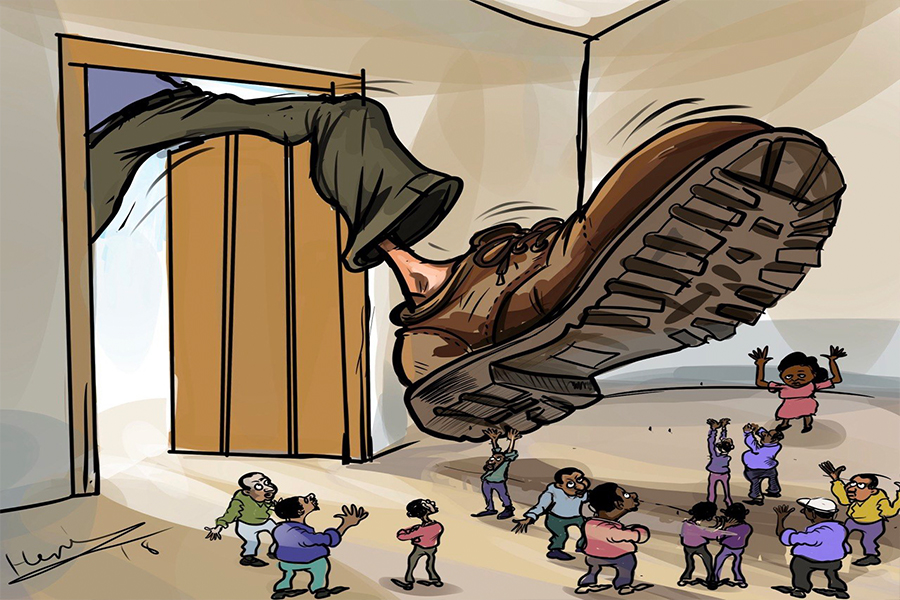
The issues of discarded needles, neglected children's playground, and uncleaned waste are not separate incidents; they are all symptoms of a single, deeply rooted problem: the erosion of shared responsibility. The committee’s focus on the aesthetics of the front of the compound is an act of denial. By ignoring the fundamental issuesthe sharp objects, the hygiene hazards, the parking-over-playground dilemmathey enable and validate the thoughtless behavior of the residents.
My own internal struggle,the wish to confront, balanced by the fear of causing a sceneperfectly illustrates the silent social contract breaking down. When confronting a neighbor over basic decency becomes an act of bravery rather than a normal civil interaction, the entire community has lost its way. The dried waste on the pavement, then, is more than just a stain; it is a monument to collective indifference, a visible sign that in this shared space, the comfort and convenience of the self-have definitively triumphed over the well-being and safety of the collective. Until that fundamental shift in individual accountability occurs, the compound will remain superficially pretty, but fundamentally broken.
PUBLISHED ON
Oct 25,2025 [ VOL
26 , NO
1330]

Verbatim | Apr 27,2024

Featured | Jan 03,2026

Fortune News | Sep 08,2024

Radar | Nov 26,2022
View From Arada | Mar 07,2026

Commentaries | Apr 10,2023
Radar | Sep 14,2025
In-Picture | Aug 04,2024

Radar | Dec 01,2024

Featured | Sep 10,2021

Photo Gallery | 190989 Views | May 06,2019

Photo Gallery | 180771 Views | Apr 26,2019

Photo Gallery | 177442 Views | Oct 06,2021

My Opinion | 143084 Views | Aug 14,2021








Dec 22 , 2024 . By TIZITA SHEWAFERAW
Charged with transforming colossal state-owned enterprises into modern and competitiv...

Aug 18 , 2024 . By AKSAH ITALO
Although predictable Yonas Zerihun's job in the ride-hailing service is not immune to...

Jul 28 , 2024 . By TIZITA SHEWAFERAW
Unhabitual, perhaps too many, Samuel Gebreyohannes, 38, used to occasionally enjoy a couple of beers at breakfast. However, he recently swit...

Jul 13 , 2024 . By AKSAH ITALO
Investors who rely on tractors, trucks, and field vehicles for commuting, transporting commodities, and f...
Jul 4 , 2026
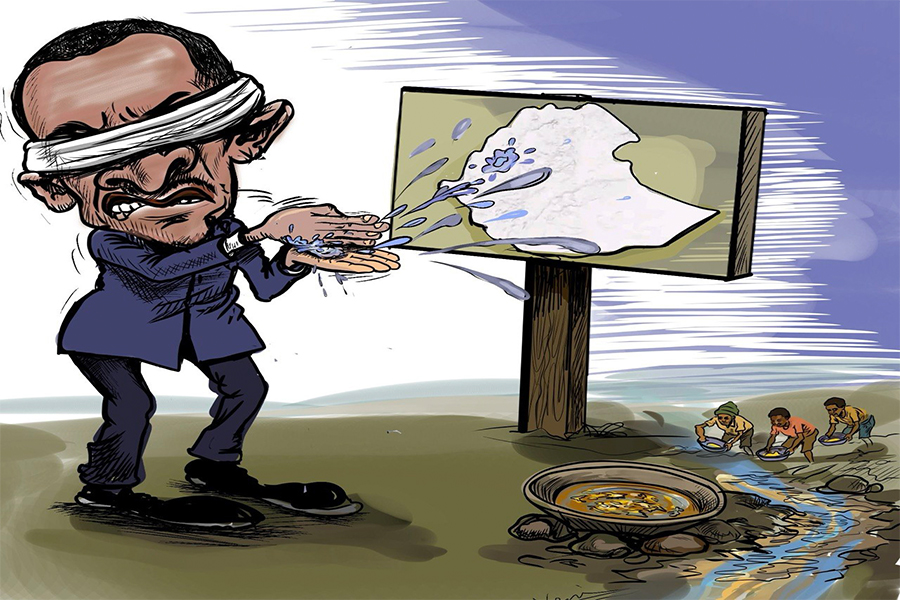
In the goldfields of the Benishangul-Gumuz Regional State, Ethiopia's balance-of-paym...
Jun 27 , 2026
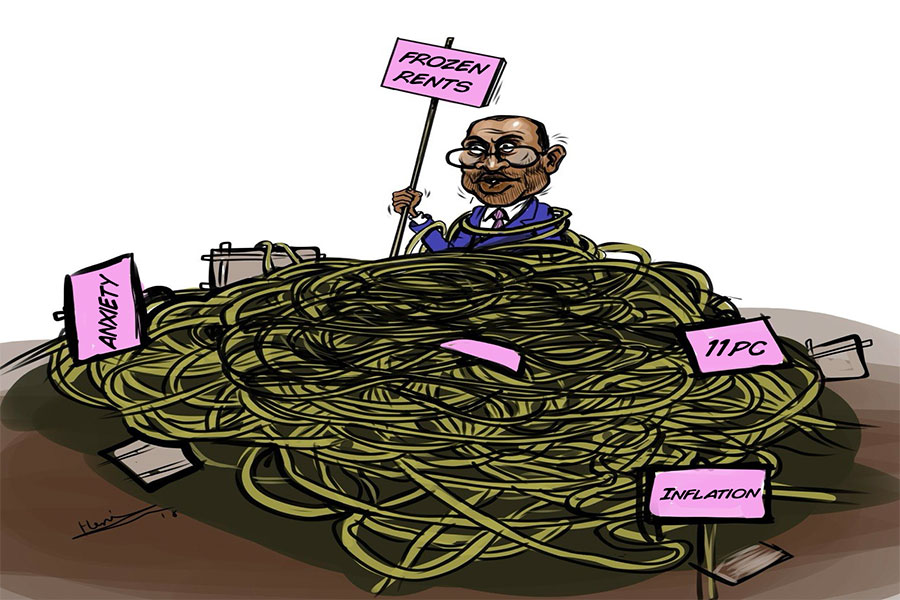
The federal legislative house rushed through one of the country's most contentious ho...
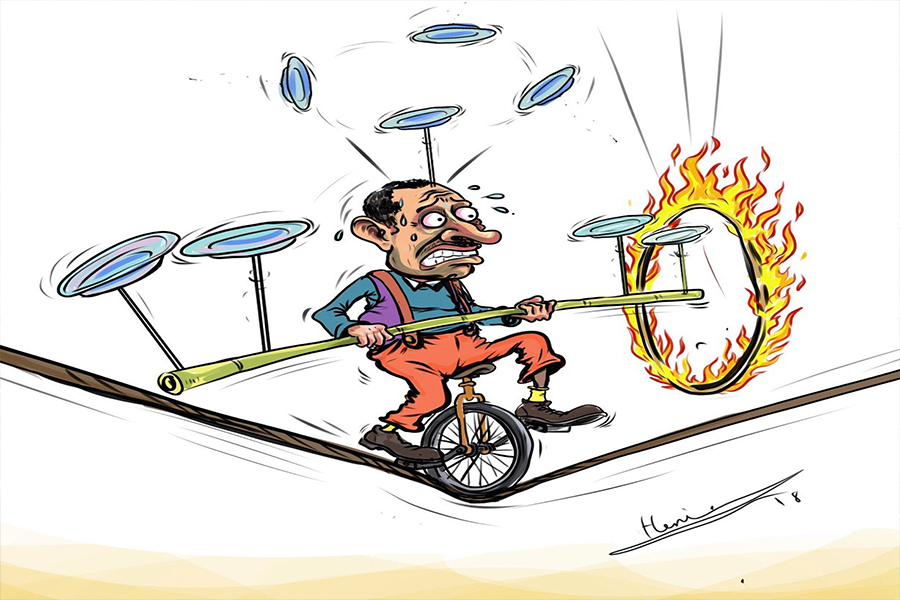
When Parliament takes up the appropriation bill, federal legislators will receive a d...
Jun 13 , 2026
The recent policy decision to fully open freight forwarding to foreign capital may be...
Jul 7 , 2026
The health sector remains underprovided despite rising public spending, Prime Ministe...
Jul 7 , 2026
Prime Minister Abiy Ahmed (PhD) delivered one of his bluntest rebukes yet to the coun...

Jul 7 , 2026
Prime Minister Abiy answered his critics with a mix of gratitude and edge, thanking l...

Jul 7 , 2026
A ruling-party lawmaker, Mohammed Ahmed, called the Chamber to its feet for Prime Min...






 Loading your updates...