

Fortune News | Nov 07,2020



Sep 13 , 2025
By Kidist Yidnekachew
For generations, the dream of harnessing the Abay River has echoed across Ethiopia. It has been spoken of in speeches, written into songs, and carried in the quiet hopes of ordinary citizens. The river’s immense potential promised a brighter, more independent future, but for many including myself it long felt like an ambition just out of reach. The scale of such a project, the volatile politics surrounding it, and the audacity required to even attempt it made the vision seem unattainable within our lifetimes. Yet today, that dream stands in stone and steel. The inauguration of the Grand Ethiopian Renaissance Dam (GERD) is not just the opening of a massive hydroelectric project. It is the culmination of decades of sacrifice, resilience, and belief in a collective future.
Abay has always been more than a river; it has been a symbol of both possibility and frustration. Conversations from over a decade ago captured this duality. Pride was always there, but so was doubt: could a nation still finding its economic footing really build one of the world’s largest dams on its own? The question was not trivial, nor was the scepticism misplaced. But what once seemed impossible is now reality. The GERD is a towering declaration of intent, an unmistakable reminder that the country’s fate is not dictated by circumstance but shaped by determination.
To see the dam completed is to witness the materialisation of a collective aspiration. This project belongs to no single leader or political party. It belongs to the people who funded it through bonds and donations, the workers who laboured day and night under difficult conditions, and the engineers who translated vision into blueprints. Its purpose is universal: to bring light into homes, to power schools, to fuel industries. It is a project that unites rather than divides, standing above politics as a shared triumph for an entire nation.
Leadership must be acknowledged. Those who dared to launch and sustain the GERD in the face of external pressures, domestic resistance, and logistical hurdles deserve recognition for their vision and persistence. But credit extends far beyond the political class. The true legacy lies in the millions of Ethiopians who invested their trust, their earnings, and their labour in this dream. They believed in something larger than themselves, and their collective faith has delivered a new symbol of self-reliance.
The GERD’s completion is a watershed moment, not just in Ethiopia’s infrastructure history but in its cultural and political psyche. It is a reminder that while scepticism and doubt may be natural companions to ambition, they do not define outcomes. What defines outcomes is resolve. What sustains progress is unity. The dam is a monument to both.
This moment, however, is not without responsibility. A dam does not power a nation on its own. It must be managed with wisdom, its electricity distributed equitably, and its benefits channelled toward meaningful development. Without careful governance, the GERD risks becoming more symbol than solution. Ethiopia’s challenge is to translate national pride into lasting prosperity, ensuring that this dream-turned-reality genuinely uplifts households, industries, and communities.
As the turbines begin to spin, the Abay River’s role transforms from a symbol of untapped promise into a dynamic engine of national progress. What once flowed by as an emblem of longing now generates energy, confidence, and momentum. The GERD is more than an engineering marvel; it is a cultural milestone, a testament to what Ethiopians can achieve when united by vision and sacrifice.
The inauguration is not the end of a journey but the beginning of a new chapter. It is a call to safeguard what has been built, to use it wisely, and to carry forward the lesson that when a people dream together, and act together, no ambition is too audacious. Abay now powers more than turbines. It powers belief in Ethiopia’s capacity to carve its own future.
PUBLISHED ON
Sep 13,2025 [ VOL
26 , NO
1324]

Fortune News | Nov 07,2020

Viewpoints | Aug 01,2020
Sunday with Eden | Mar 14,2026
Fortune News | Mar 03,2020

Letter To Editor | Feb 29,2020
Viewpoints | Mar 07,2020
Radar | Apr 30,2021
Radar | Apr 24,2021
Radar | Feb 23,2019
Fortune News | Oct 24,2020

Photo Gallery | 191218 Views | May 06,2019

Photo Gallery | 181009 Views | Apr 26,2019

Photo Gallery | 177678 Views | Oct 06,2021

My Opinion | 143301 Views | Aug 14,2021







Dec 22 , 2024 . By TIZITA SHEWAFERAW
Charged with transforming colossal state-owned enterprises into modern and competitiv...

Aug 18 , 2024 . By AKSAH ITALO
Although predictable Yonas Zerihun's job in the ride-hailing service is not immune to...

Jul 28 , 2024 . By TIZITA SHEWAFERAW
Unhabitual, perhaps too many, Samuel Gebreyohannes, 38, used to occasionally enjoy a couple of beers at breakfast. However, he recently swit...

Jul 13 , 2024 . By AKSAH ITALO
Investors who rely on tractors, trucks, and field vehicles for commuting, transporting commodities, and f...
Jul 11 , 2026
At a market stall, reform arrives without a communique. It comes as a higher transpor...
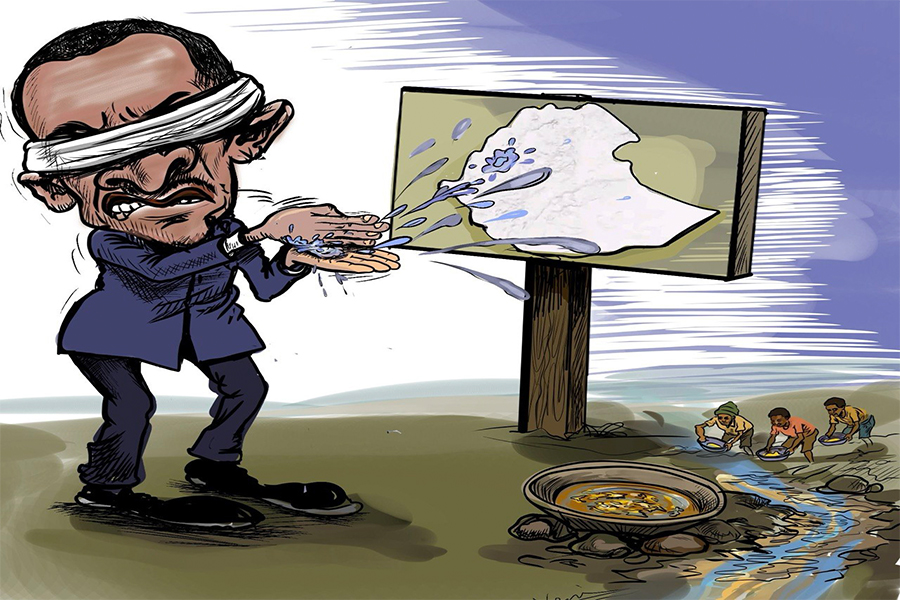
Jul 4 , 2026
In the goldfields of the Benishangul-Gumuz Regional State, Ethiopia's balance-of-paym...
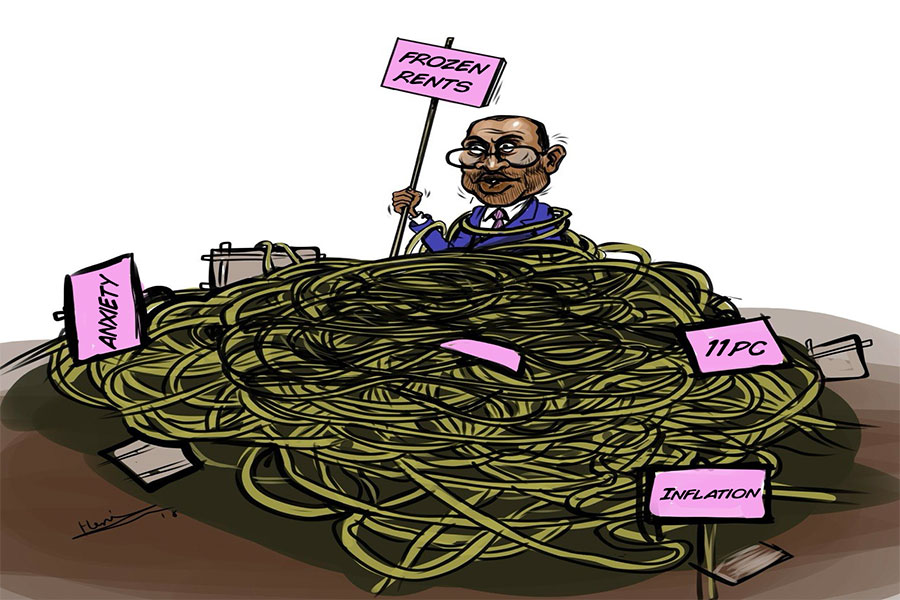
Jun 27 , 2026
The federal legislative house rushed through one of the country's most contentious ho...
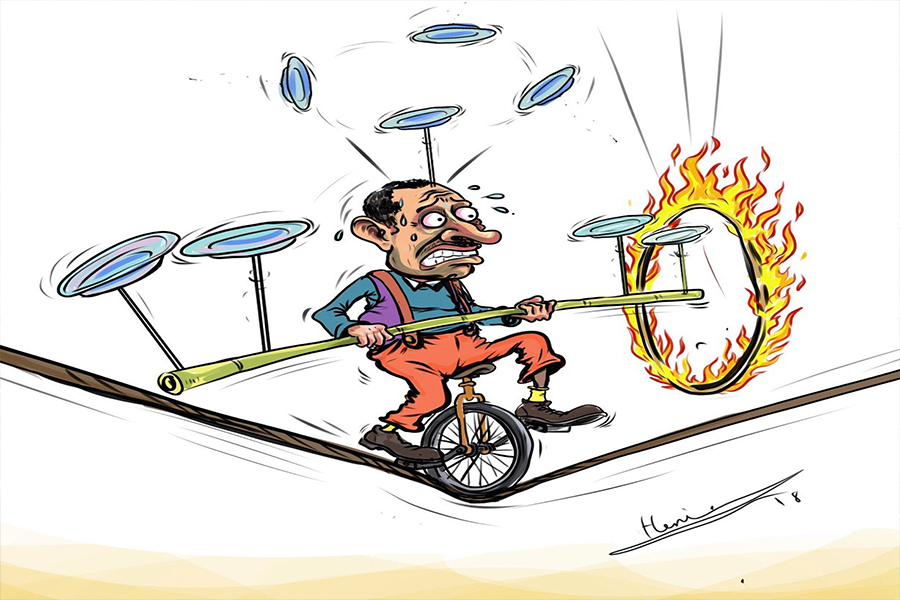
When Parliament takes up the appropriation bill, federal legislators will receive a d...
Jul 12 , 2026 . By BEZAWIT HULUAGER
When a WhatsApp notice told about 60 households at a gated community on the outskirts...
Jul 12 , 2026 . By BEZAWIT HULUAGER
The Addis Abeba City Administration has begun charging a municipal tax on every hotel...
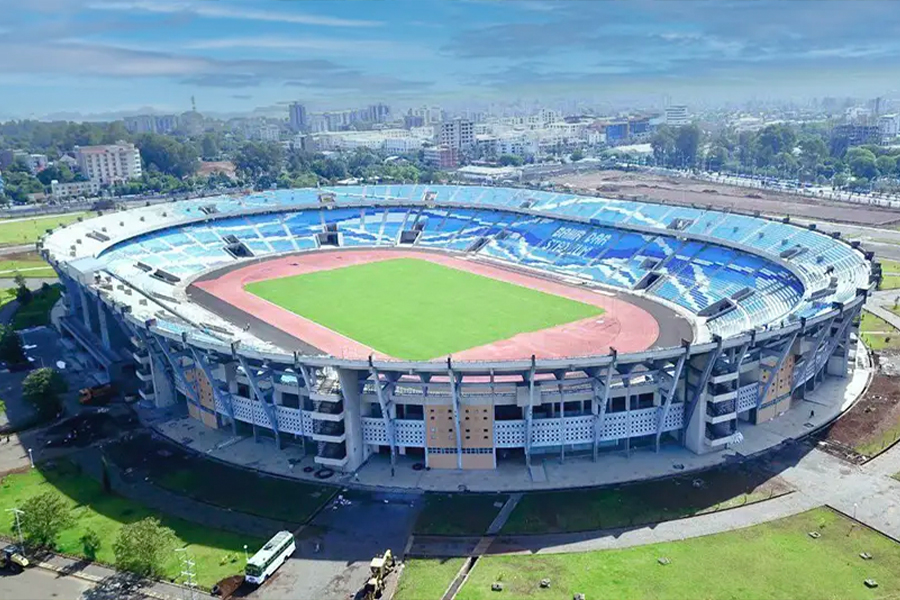
Jul 12 , 2026 . By BEZAWIT HULUAGER
Bahir Dar International Stadium is nearing completion, and the people building it say...
Jul 12 , 2026 . By BEZAWIT HULUAGER
Federal regulators of the coffee sector are preparing a fund to shield growers and ex...




 Loading your updates...