
Life Matters | Mar 28,2026



May 24 , 2025
By Kidist Yidnekachew
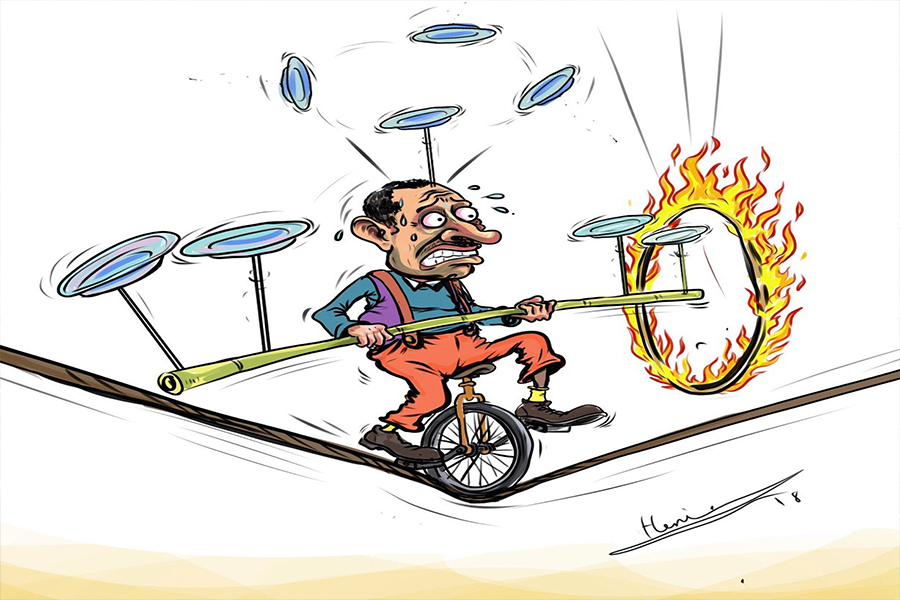
Reliable information about the recent strike by health professionals in Ethiopia has proven elusive. The public discourse is muddied by sensationalism, bias, and deafening silences. Online, a stream of videos shows deserted hospitals, while an increasing number of doctors speak out, visibly exhausted and disappointed. Their frustration is palpable. Few professions demand as much as medicine; years of grueling education followed by daily confrontation with suffering and death. The burdens of the profession are carried quietly and, often, without thanks.
Yet, the conversation rarely moves toward meaningful solutions. A salary increment should not be a radical proposition. At the very least, targeted interventions such as subsidised housing, food allowances, or transportation support could ease the immense strain faced by health workers. These ideas are neither utopian nor extravagant; they are simple acknowledgments of the value of labor that saves lives.
The issue, however, stretches far beyond doctors. Across the country, highly educated professionals, from engineers to academics, find themselves earning less than a single appearance in a television advertisement. Drivers or janitors employed by NGOs or embassies often make more than licensed practitioners. There is nothing inherently unjust about blue-collar workers earning a dignified wage. The injustice lies in a system that undervalues intellectual labor while fetishizing spectacle.
If this pattern persists, society risks intellectual stagnation. Young people will flock to TikTok and live-streaming games, chasing thousands of dollars for silly stunts, rather than dedicating a decade to their studies only to struggle with rent. The consequences of such a shift will be deeply corrosive.
But there is another path. Imagine Ethiopia investing heavily in its healthcare system, offering its doctors world-class training and compensation that reflects their expertise. International hospitals could become hubs for regional medical tourism, attracting patients from across the continent. It is not far-fetched.
If the country can dream of robots in every household in ten years, then it is easy to envision Ethiopia as a country teeming with highly educated health professionals, specialists, and surgeons who earn in dollars simply for their consultations? Ethiopia possess the potential, and it must be cultivated.
Disturbingly, there are murmurs of foreign doctors being brought in to fill gaps left by striking professionals. The cost of such a policy, flights, accommodation, translators could rival the investment needed to pay local doctors fairly. Worse still, the language barriers pose a real threat to patient safety. There are translators who are not even proficient in the languages they claim to be experts in. Misinterpretation in a clinical setting can be fatal.
And even without linguistic hurdles, Ethiopia’s health sector is no stranger to human error; misdiagnoses, surgical accidents, and equipment left inside patients have all made headlines. One such story prompted an angry email from a doctor who accused me of disrespect. Yet that story was rooted in a devastating personal experience: a botched surgery that left a family member with a permanently damaged hand. The point was never to vilify doctors, but to spotlight a system stretched to its breaking point.
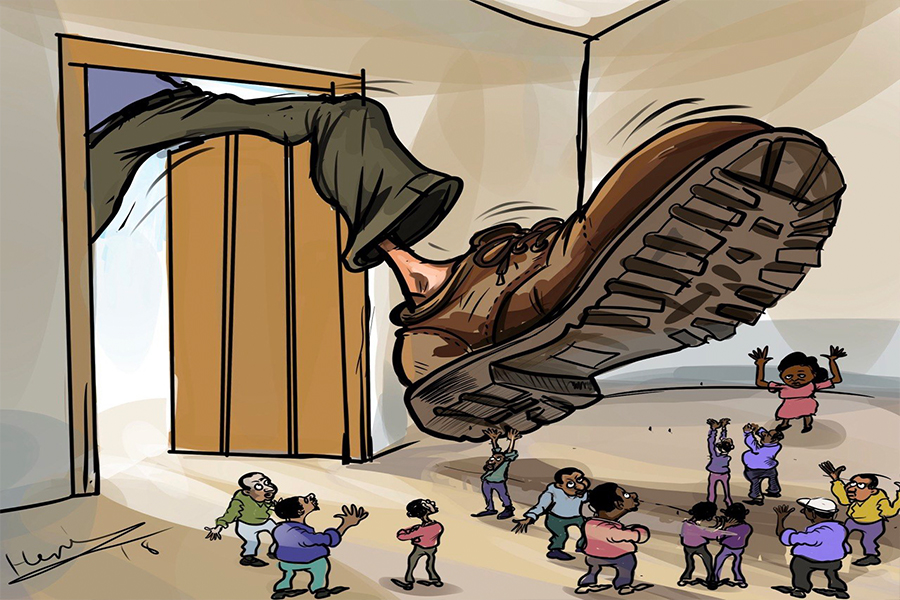
Depoliticizing this moment is crucial. The conversation must return to core concerns: dignity, fairness, and public health. A blanket condemnation of the strike, or punitive crackdowns on professionals, will solve nothing. That only deepens resentment. And while abandoning patients in protest is ethically fraught, so too is ignoring the root causes that drive professionals to such extremes.
There must be space for negotiation. Constructive dialogue, between the government, professional associations, and civil society, is the only viable path forward. This should not be a power struggle; the ball is already in the government's court. A government, much like a parent, should scold citizens when they err, yet simultaneously extend a protective arm.
Politics is rarely straightforward. But some truths are simple. When those entrusted with saving lives feel unseen, unheard, and unvalued, the entire country suffers. Addressing that reality with empathy and clarity might be the first step toward real healing.
PUBLISHED ON
May 24,2025 [ VOL
26 , NO
1308]

Life Matters | Mar 28,2026

Viewpoints | Mar 21,2026
Fortune News | Jul 06,2025

Commentaries | Oct 16,2024
Radar | Jun 14,2026

Radar | May 18,2019

Radar | Mar 18,2023
Commentaries | Dec 27,2025
Radar | May 02,2020
Fortune News | Jul 07,2024

Photo Gallery | 190981 Views | May 06,2019

Photo Gallery | 180764 Views | Apr 26,2019

Photo Gallery | 177435 Views | Oct 06,2021

My Opinion | 143077 Views | Aug 14,2021





Dec 22 , 2024 . By TIZITA SHEWAFERAW
Charged with transforming colossal state-owned enterprises into modern and competitiv...

Aug 18 , 2024 . By AKSAH ITALO
Although predictable Yonas Zerihun's job in the ride-hailing service is not immune to...

Jul 28 , 2024 . By TIZITA SHEWAFERAW
Unhabitual, perhaps too many, Samuel Gebreyohannes, 38, used to occasionally enjoy a couple of beers at breakfast. However, he recently swit...

Jul 13 , 2024 . By AKSAH ITALO
Investors who rely on tractors, trucks, and field vehicles for commuting, transporting commodities, and f...
Jul 4 , 2026
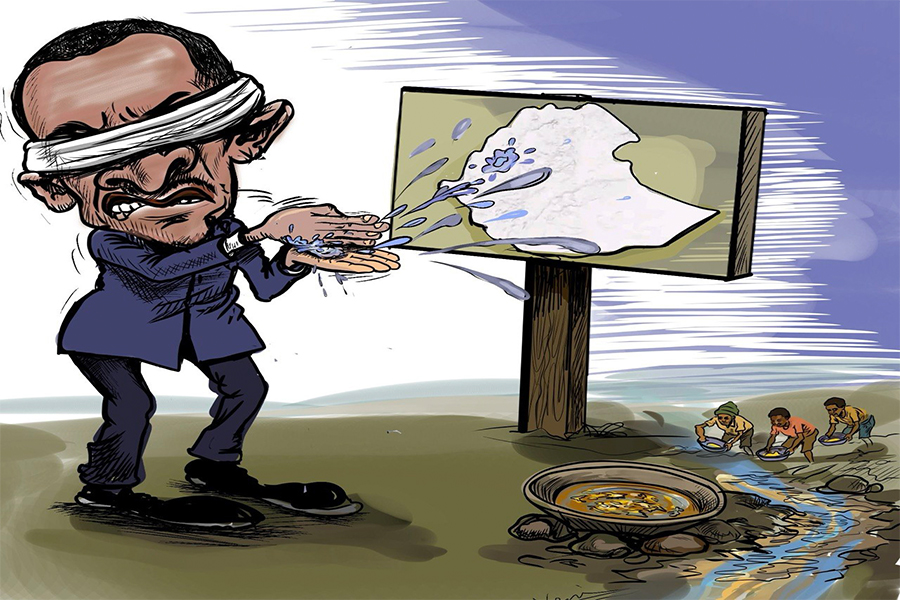
In the goldfields of the Benishangul-Gumuz Regional State, Ethiopia's balance-of-paym...
Jun 27 , 2026
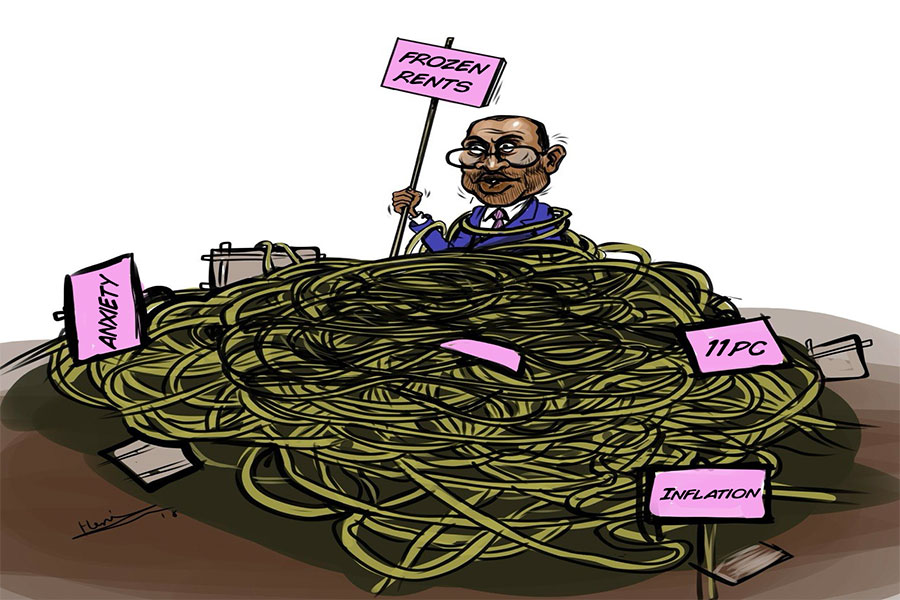
The federal legislative house rushed through one of the country's most contentious ho...
When Parliament takes up the appropriation bill, federal legislators will receive a d...
Jun 13 , 2026
The recent policy decision to fully open freight forwarding to foreign capital may be...
Jul 7 , 2026
The health sector remains underprovided despite rising public spending, Prime Ministe...
Jul 7 , 2026
Prime Minister Abiy Ahmed (PhD) delivered one of his bluntest rebukes yet to the coun...
Jul 7 , 2026
Prime Minister Abiy answered his critics with a mix of gratitude and edge, thanking l...

Jul 7 , 2026
A ruling-party lawmaker, Mohammed Ahmed, called the Chamber to its feet for Prime Min...






 Loading your updates...