

Photo Gallery | 191160 Views | May 06,2019



Feb 22 , 2025
By Sharew Erkehun , Dawit Ayele
Ethiopia has relied on American foreign assistance for decades, receiving between 1.1 billion and two billion dollars annually through the U.S. Agency for International Development (USAID). In 2023 alone, it received about 1.3 billion dollars, making it the largest aid recipient country from Washington, after Ukraine. Although USAID works outside Ethiopia’s public finance system, its contributions have sustained essential services, notably in health and agriculture.
Now, with the Agency’s funding on hold, a crisis looms that threatens to undermine progress across critical sectors. The repercussions are already visible.
The Ministry of Health recently terminated 5,000 USAID-funded health workers, shifting their duties to an overstretched public system. According to reports by Reuters, these contract terminations are underway, further undermining Ethiopia’s capacity to provide crucial services. The cutbacks extend beyond personnel. The U.S. President’s Emergency Plan for AIDS Relief (PEPFAR) covers 100pc of Ethiopia’s procurement of viral load and Early Infant Diagnosis reagents. Without this support, HIV treatment and prevention programs face severe disruptions, endangering countless lives.
This abrupt funding halt could stall years of gains in maternal health, child nutrition, and agricultural productivity, all heavily supported by American aid. The freeze may also undermine ongoing immunisation programs and the distribution of mosquito nets, further straining the already burdened healthcare system.
The sudden withdrawal of USAID leaves a substantial funding gap, forcing the government and other donors to scramble for solutions. Historically, non-governmental organisations (NGOs) and donors have plugged the gap, with USAID among the most important. Its departure has laid bare the fragilities in public service financing and heightened calls for reform.
While immediate pressures are sharp, some see an opportunity to recalibrate Ethiopia’s public finance management and shift toward a homegrown funding structure that reduces reliance on external sources.
Under the federal arrangement, sustaining local services is vital. The system requires the federal government to use capital allocations, block grants, and specialised funds, such as funds, to finance programs under the sustainable development goals (SDG). However, much of the federal budget is funnelled into large-scale infrastructure projects, leaving local authorities strapped for cash to meet community-level needs. At the woreda level, education and healthcare often rely on thinly stretched grants and meagre local revenues, which barely cover salaries and running costs.
The shock triggered by USAID’s abrupt exit demands a reexamination of how the government funds essential services. Preserving lifesaving programs, including healthcare, depends on restructuring the funding model to ensure critical resources reach those most in need. Federal authorities still appear best equipped to buy and distribute essential commodities in health, agriculture, and education. Yet, local-level funding mechanisms are equally important to guarantee targeted and efficient service delivery.
One potential blueprint is the newly formed Green Legacy and Degraded Landscape Restoration Special Fund. This entity, approved by Parliament, directs between 0.5pc and one percent of federal revenue to grassroots projects, contingent on performance benchmarks. Adapting a similar formula for core services could boost accountability and help ensure that funds serve communities effectively. Another avenue is performance-based financing, which would reward local officials, including health workers, agricultural experts, and teachers, for meeting service delivery standards. This system could enhance efficiency, ease the burden on federal coffers, and draw from Rwanda’s successful extension worker program, where frontline providers receive strategic incentives to improve outcomes.
Some observers hope that USAID might resume operations, but the prevailing sentiment is that Ethiopia should brace for a future where foreign aid is no longer guaranteed, and learn to thrive on its own terms.
The Uncertainties about USAID’s eventual return, possibly tied to stricter conditions, has the importance and urgency of establishing a self-sufficient framework. Ethiopia should capitalise on this moment as a turning point for reform, forging a more robust model for financing public services. A shift toward localised oversight and funding, backed by federal officials' guidance, could yield accountability and sustainability, which have proved elusive in the country’s decades-long dependence on foreign support.
PUBLISHED ON
Feb 22,2025 [ VOL
25 , NO
1295]
Photo Gallery | 191160 Views | May 06,2019

Photo Gallery | 180960 Views | Apr 26,2019

Photo Gallery | 177621 Views | Oct 06,2021

My Opinion | 143253 Views | Aug 14,2021





Dec 22 , 2024 . By TIZITA SHEWAFERAW
Charged with transforming colossal state-owned enterprises into modern and competitiv...

Aug 18 , 2024 . By AKSAH ITALO
Although predictable Yonas Zerihun's job in the ride-hailing service is not immune to...

Jul 28 , 2024 . By TIZITA SHEWAFERAW
Unhabitual, perhaps too many, Samuel Gebreyohannes, 38, used to occasionally enjoy a couple of beers at breakfast. However, he recently swit...

Jul 13 , 2024 . By AKSAH ITALO
Investors who rely on tractors, trucks, and field vehicles for commuting, transporting commodities, and f...
Jul 11 , 2026
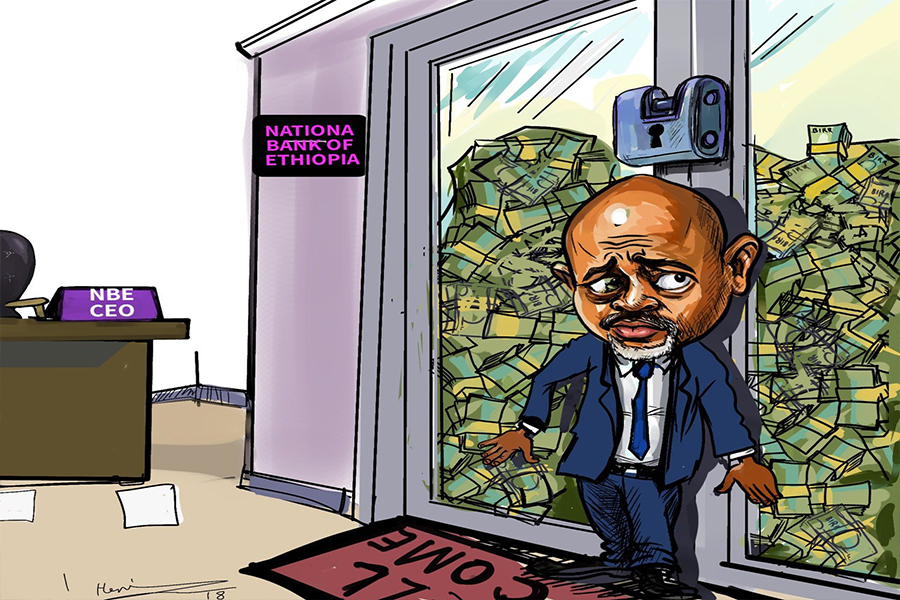
At a market stall, reform arrives without a communique. It comes as a higher transpor...
Jul 4 , 2026
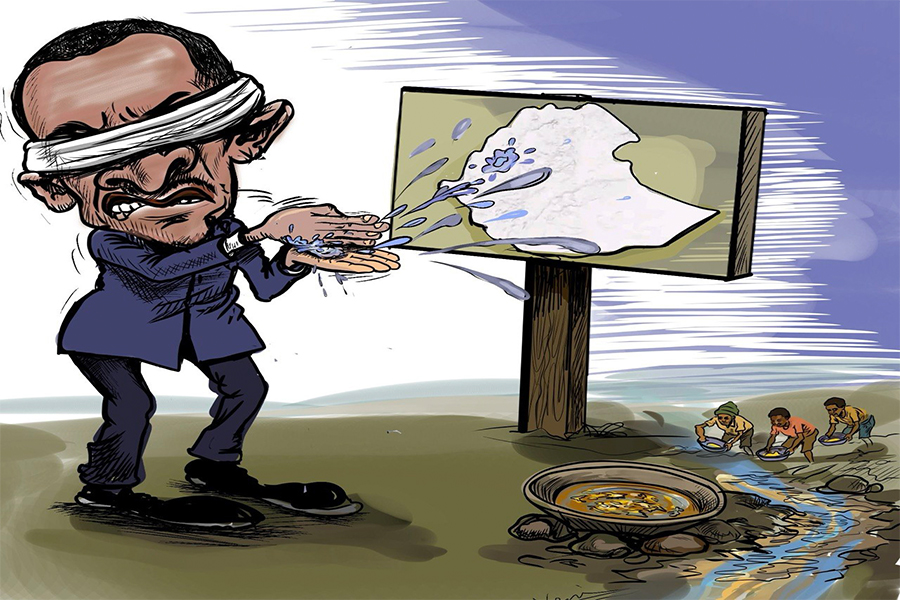
In the goldfields of the Benishangul-Gumuz Regional State, Ethiopia's balance-of-paym...
Jun 27 , 2026
The federal legislative house rushed through one of the country's most contentious ho...
When Parliament takes up the appropriation bill, federal legislators will receive a d...
Jul 12 , 2026 . By BEZAWIT HULUAGER
When a WhatsApp notice told about 60 households at a gated community on the outskirts...

Jul 12 , 2026 . By BEZAWIT HULUAGER
The Addis Abeba City Administration has begun charging a municipal tax on every hotel...
Jul 12 , 2026 . By BEZAWIT HULUAGER
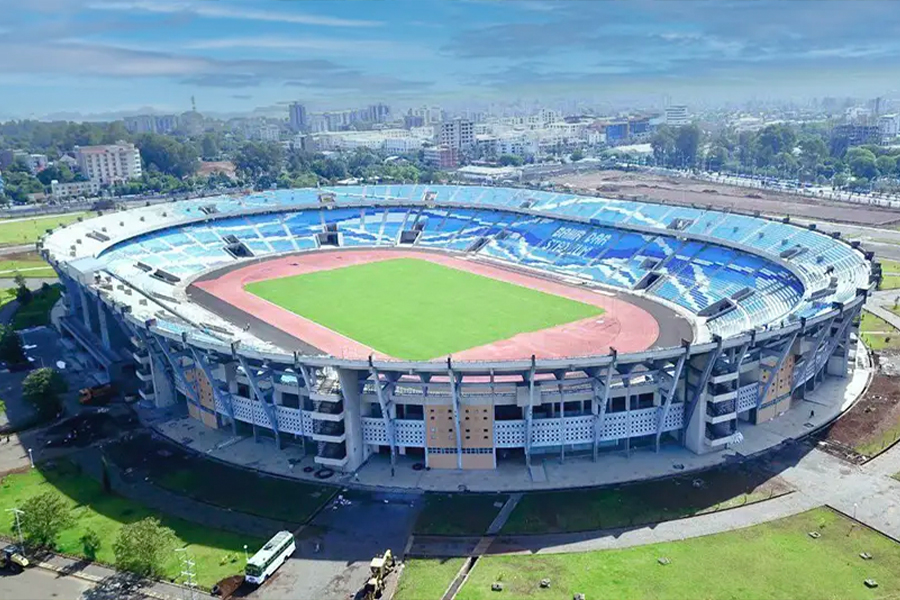
Bahir Dar International Stadium is nearing completion, and the people building it say...
Jul 12 , 2026 . By BEZAWIT HULUAGER
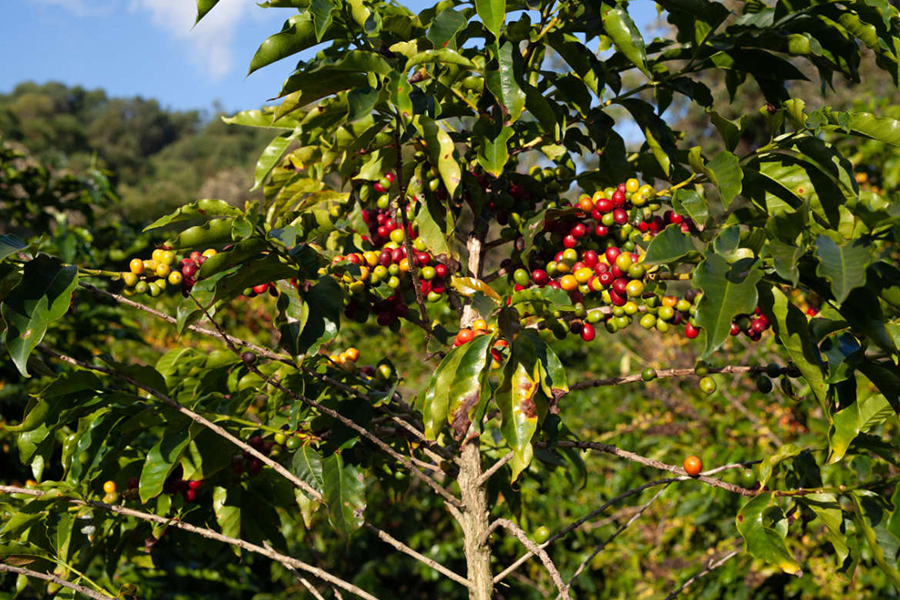
Federal regulators of the coffee sector are preparing a fund to shield growers and ex...





 Loading your updates...