

Delicate Number | May 03,2025



Jul 8 , 2023
By Tarja Halonen , Hindou Oumarou Ibrahim
Women have cultivated and nurtured life on our planet for centuries. Yet, while the world enjoys the fruits of their labour, they often have no say or control over the land they work.
To add insult to injury, the twin threats of drought and desertification – intensified by climate change – have reduced the amount of usable land, jeopardizing livelihoods as well as food production. Unsustainable farming erodes soil 100 times faster than natural processes can restore it. The United Nations has classified up to 40pc of the world's land as degraded.
Land degradation is a huge challenge, but the solution lies in the people most concerned about protecting this valuable resource: women. When given a chance, women are responsible stewards who use their extensive knowledge and skills to protect and restore the land they possess. They have also proven capable of building resilience to droughts, which are becoming more severe and common as temperatures rise.
As matters stand, women are rarely offered such opportunities. Discriminatory practices such as inadequate land-tenure systems, limited access to credit, unequal pay, low levels of decision-making autonomy, and sexual- and gender-based violence prevent their active participation in land management.
In Chad, the government excludes many women and girls from land allocations, leaving them with insecure tenure. Gender norms that devalue the contributions of women further reinforce their precarious position. The common expression "Mara Sakit", meaning "She's just a woman," exemplifies this sexist dynamic.
The problem extends far beyond one country. Despite comprising nearly half of the world's agricultural workforce and producing up to 80pc of food in developing economies, women own less than one-fifth of land worldwide. More than 100 governments continue to deny women the right to inherit their husband's property.
This imbalance, coupled with the worsening climate crisis, leads to female agricultural workers bearing the brunt of land degradation. They suffer from food and water scarcity and are often forced to migrate, contributing to gender inequality and its expression through violence and discrimination against women and girls. Indigenous women and girls, people with disabilities, and women human rights defenders are particularly vulnerable in such conditions.
Frustrated by their lack of agency in decision-making, women in some countries have started to fight for their land rights. Sierra Leone, for example, recently passed a new law that grants women the right to own, lease, or buy land in the country. In Tanzania, women given stronger land rights earn up to 3.8 times more income and are more likely to have individual savings.
This highlights an essential byproduct of equal land rights: economic security for women and girls. Giving women a more significant say in land management can cascade knock-on effects on household income, food security, and investment in children's education and health.
Equal land rights could also boost food security, as women invest more in agricultural technology, and use their indigenous traditional knowledge, which results in higher yields. If women farmers had access to the same level of resources as men, the number of undernourished people in the world could be reduced by as much as 100-150 million people. To make this a reality, governments must remove the barriers that prevent women and girls from owning and inheriting land.
More broadly, policymakers should involve women in decisions about land management, conservation, and restoration.
The private sector also has a critical role to play. By expanding access to credit, for example, financial institutions can make it easier for female agricultural workers to purchase the technology and inputs required to improve yields, protect soils, and guard against land degradation.
Yet the most critical work, including raising awareness and campaigning for change, falls to local communities. Campaigns like With Rural Women for a Child Without Hunger have pushed for land reforms and encouraged dialogue with authorities, putting affected women front and centre. The outcome in Chad is promising: after mobilizing more than 25,000 women in seven provinces between 2017 and 2019, 300hct of land was allocated to 18 women's groups.
The United Nations Convention to Combat Desertification has placed gender equality at the core of its mandate – and for good reason. As the convention acknowledges in its Gender Action Plan, women play a crucial role in sustainable land management. Consequently, securing women's land rights is not only the right thing to do; it will boost land-restoration efforts, develop long-term resilience to droughts, and create more equitable economies. Our planet, and the health of our societies, depend on it.
This article was provided by Project Syndicate (PS).
PUBLISHED ON
Jul 08,2023 [ VOL
24 , NO
1210]
Delicate Number | May 03,2025

Radar | Nov 26,2022
Radar | Apr 27,2025

Fortune News | Feb 18,2026
Commentaries | Jul 15,2023
Radar | Jan 03,2026

View From Arada | Apr 25,2020
Viewpoints | May 07,2022
Radar | Nov 27,2018
Radar | Aug 01,2020

Photo Gallery | 190814 Views | May 06,2019

Photo Gallery | 180580 Views | Apr 26,2019

Photo Gallery | 177250 Views | Oct 06,2021

My Opinion | 142930 Views | Aug 14,2021




Dec 22 , 2024 . By TIZITA SHEWAFERAW
Charged with transforming colossal state-owned enterprises into modern and competitiv...

Aug 18 , 2024 . By AKSAH ITALO
Although predictable Yonas Zerihun's job in the ride-hailing service is not immune to...

Jul 28 , 2024 . By TIZITA SHEWAFERAW
Unhabitual, perhaps too many, Samuel Gebreyohannes, 38, used to occasionally enjoy a couple of beers at breakfast. However, he recently swit...

Jul 13 , 2024 . By AKSAH ITALO
Investors who rely on tractors, trucks, and field vehicles for commuting, transporting commodities, and f...
Jul 4 , 2026
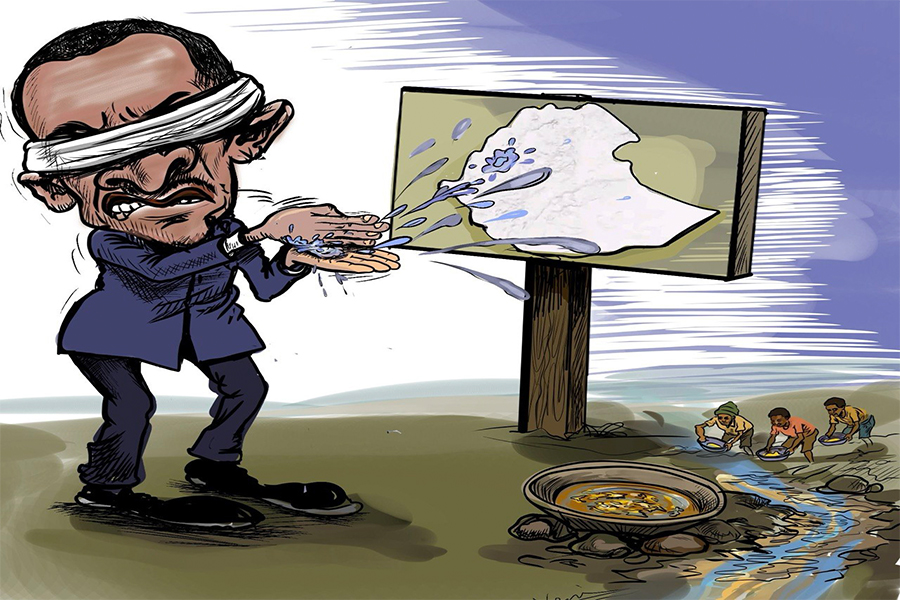
In the goldfields of the Benishangul-Gumuz Regional State, Ethiopia's balance-of-paym...
Jun 27 , 2026
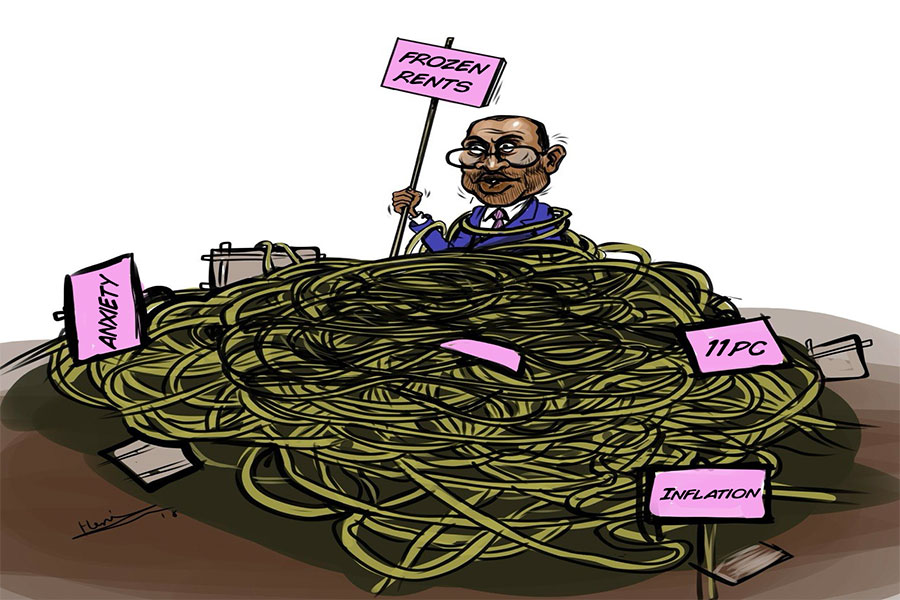
The federal legislative house rushed through one of the country's most contentious ho...
When Parliament takes up the appropriation bill, federal legislators will receive a d...
Jun 13 , 2026
The recent policy decision to fully open freight forwarding to foreign capital may be...
Jul 7 , 2026
The health sector remains underprovided despite rising public spending, Prime Ministe...
Jul 7 , 2026
Prime Minister Abiy Ahmed (PhD) delivered one of his bluntest rebukes yet to the coun...
Jul 7 , 2026
Prime Minister Abiy answered his critics with a mix of gratitude and edge, thanking l...
Jul 7 , 2026
A ruling-party lawmaker, Mohammed Ahmed, called the Chamber to its feet for Prime Min...







 Loading your updates...