
Commentaries | Jan 17,2026



Mar 11 , 2023
By Claire Hutchings
We are at the halfway point for implementing the Sustainable Development Goals (SGDs), but we are not halfway to achieving them. In many critical areas – from poverty to food security – progress has been reversed in recent years, owing to severe and compounding crises. Governments worldwide must urgently recommit to the SDGs in this difficult environment, including their underlying promise to leave no one behind.
The challenge is formidable.
Consider SDG1, which aims to eliminate poverty in all its forms. According to the World Bank’s Partnership for Economic Inclusion, government-led poverty-alleviation programs surged in 2021. But to reach those furthest behind, such programs must recognize and account for the web of overlapping constraints that effectively “trap” people in poverty.
The global Multidimensional Poverty Index highlights that poverty encompasses deprivation and exclusion in multiple areas, such as nutrition, sanitation, healthcare, and education. Factors like gender, disability, and displacement also play an important role in keeping people in poverty. Recent research, based on experience in rural Bangladesh, shows that below a certain income/asset threshold, households’ ability to access resources that could increase their income is severely limited.
It also shows that large transfers of resources and/or support that create better jobs for the poor effectively enable people to escape the poverty trap over the long term.
Understanding the various constraints and barriers that people in extreme poverty face within each unique context is thus vital to enable governments to devise and target optimal interventions.
This is easier said than done.
People facing extreme poverty often live in isolation and thus may not be included in social registries or identified via other government mechanisms for determining eligibility for and ensuring enrollment in support programs. They may lack adequate documentation or even the basic knowledge or ability to claim benefits (due to limited mobility or literacy). As a result, the people who need the most help often end up either excluded from government programs altogether or unable to access the benefits for which they qualify.
A June 2020 report found that 79pc of the poorest quintile of the population in low-income countries receive no social assistance.
But there are steps governments can take to improve program targeting and reach. For starters, they can make greater use of registries linked to existing poverty-focused programs.
Tunisia’s government is already doing this. Using registries from its national cash-transfer program, the authorities identify households at the intersection of climate and socioeconomic vulnerability. Factors like monthly income, productive labour capacity, access to water, and land degradation are considered, as is whether the household is headed by a woman.
Combining information from other government registries or databases with existing social registries can also be effective.
Colombia’s government combined data in the Unified Registry of Victims with a social registry used for an existing cash-transfer program to identify victims of conflict who were already receiving cash transfers. The government then urged the recipients to invest the transfers in ways that boosted well-being and resilience.
The information in social registries can also be verified, updated, and enhanced through household surveys or local “vulnerability assessments,” which can help to identify the specific set of risks and deprivations faced by particular groups of people living in extreme poverty. Governments can also expand social registries, using mechanisms such as participatory community consultations that identify households that are unregistered or misrepresented in official databases.
In the Indian state of Bihar, Satat Jeevikoparjan Yojana (SJY) is a program focused on boosting “the human capital of the poorest and most excluded households through the support of consumption and livelihoods, savings, and training.” The complex and time-consuming targeting method used during the pilot period was streamlined significantly to enable the program to be scaled up. The simplified approach – including transect walks and wealth mapping based on input from village organizations – proved highly effective. SJY has reached more than 136,000 households living in extreme poverty across all 38 of Bihar’s districts.
Kenya’s Social and Economic Inclusion Project – another multidimensional initiative – promotes delivering essential services to the poor and vulnerable. To facilitate this effort, Kenya’s government worked to enhance the existing social registry by adding readily available data on marginalized people living in poverty. Kenya’s government also incorporated a participant-targeting tool, designed and maintained by partners, that collects information related to multidimensional poverty, including housing conditions, water and sanitation, energy access, productive assets, food security, and access to social programs.
Targeting does not end with registration, selection, and enrollment; it is most effective when viewed as an ongoing process, with regular assessments and feedback systems built into every program to support the continual updating, enhancement, and integration of registries, which in turn will facilitate better targeting. At the same time, governments and their partners can ensure that all participants in poverty alleviation programs are also connected to other public services and systems.
Reaching those who are the furthest behind will never be easy. But progress is possible if governments make the most of existing data and systems, carry out multidimensional local assessments, and continuously strive to improve targeting methods. And if we are going to achieve the SDGs, it is essential.
PUBLISHED ON
Mar 11,2023 [ VOL
23 , NO
1193]

Commentaries | Jan 17,2026

Sunday with Eden | Aug 27,2022

Radar | Oct 08,2022

Fortune News | May 17,2026
Radar | Dec 11,2021

Radar | Jan 12,2019
Radar | Jan 17,2026

Fortune News | Jan 05,2020
News Analysis | Mar 21,2026
Life Matters | May 16,2026

Photo Gallery | 191502 Views | May 06,2019

Photo Gallery | 181277 Views | Apr 26,2019

Photo Gallery | 177952 Views | Oct 06,2021

My Opinion | 143542 Views | Aug 14,2021





Dec 22 , 2024 . By TIZITA SHEWAFERAW
Charged with transforming colossal state-owned enterprises into modern and competitiv...

Aug 18 , 2024 . By AKSAH ITALO
Although predictable Yonas Zerihun's job in the ride-hailing service is not immune to...

Jul 28 , 2024 . By TIZITA SHEWAFERAW
Unhabitual, perhaps too many, Samuel Gebreyohannes, 38, used to occasionally enjoy a couple of beers at breakfast. However, he recently swit...

Jul 13 , 2024 . By AKSAH ITALO
Investors who rely on tractors, trucks, and field vehicles for commuting, transporting commodities, and f...
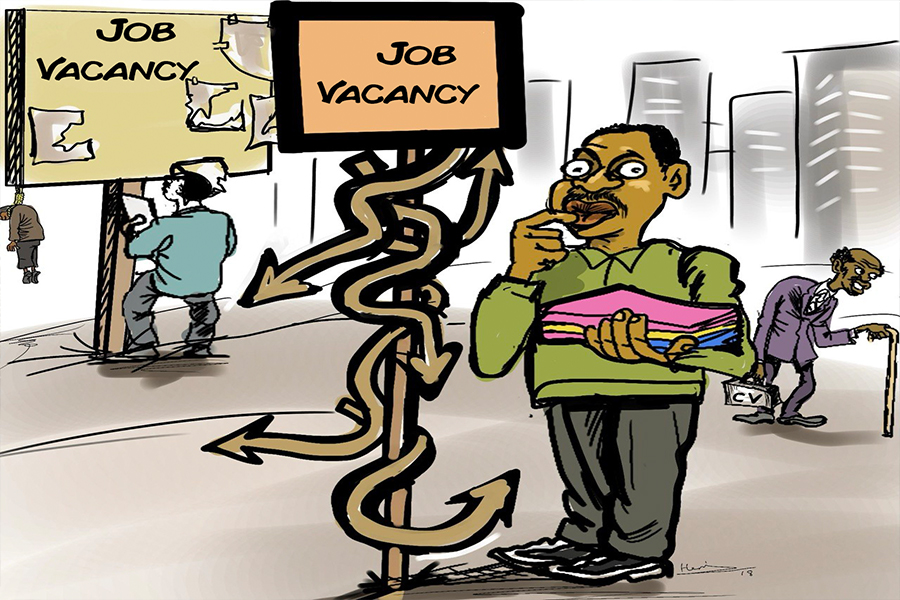
Jul 18 , 2026
Pressed in Parliament on jobs and household incomes, Prime Minister Abiy Ahmed (PhD)...

Jul 11 , 2026
At a market stall, reform arrives without a communique. It comes as a higher transpor...
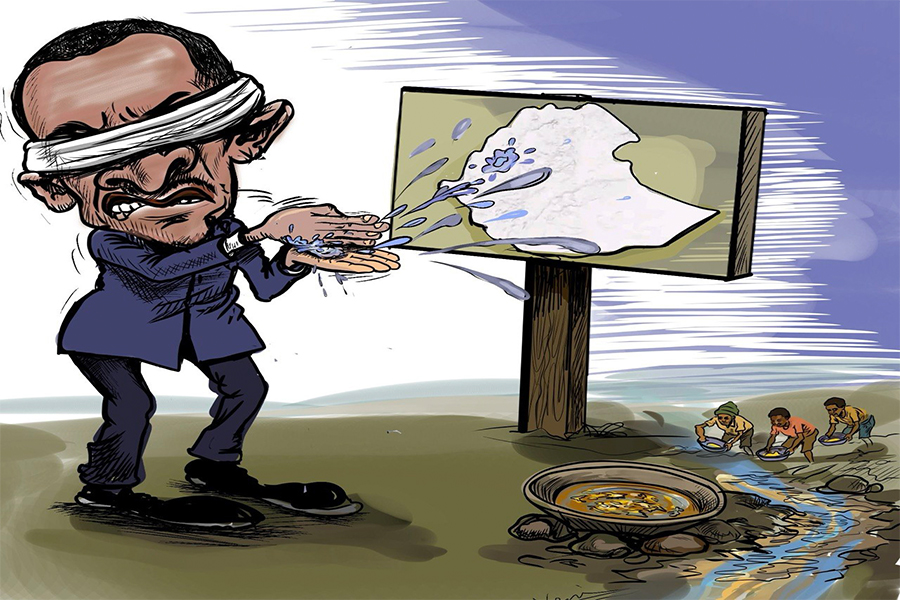
Jul 4 , 2026
In the goldfields of the Benishangul-Gumuz Regional State, Ethiopia's balance-of-paym...
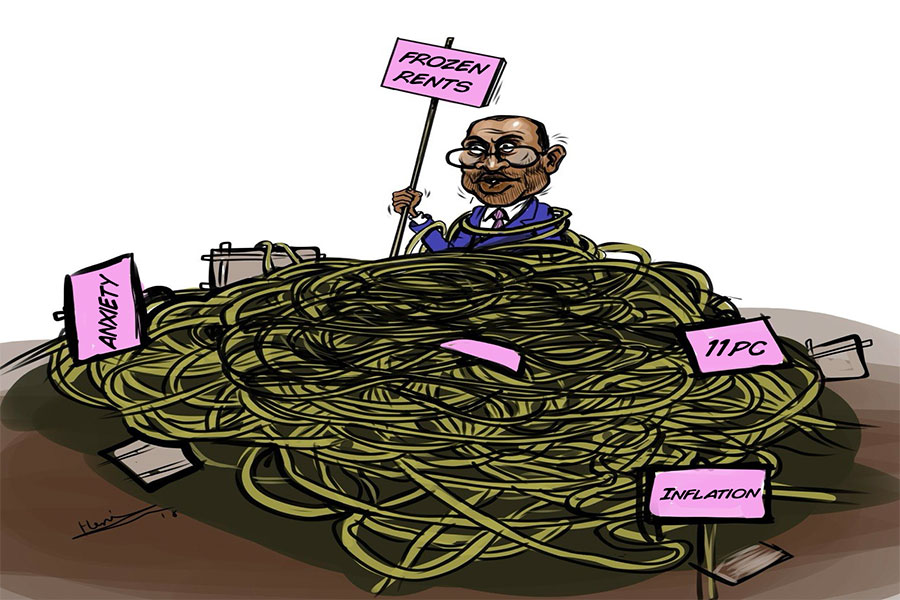
Jun 27 , 2026
The federal legislative house rushed through one of the country's most contentious ho...
Jul 19 , 2026 . By BEZAWIT HULUAGER
Bureaus, agencies and institutions under the Addis Abeba City Administration are sitt...
Jul 19 , 2026 . By NAHOM AYELE
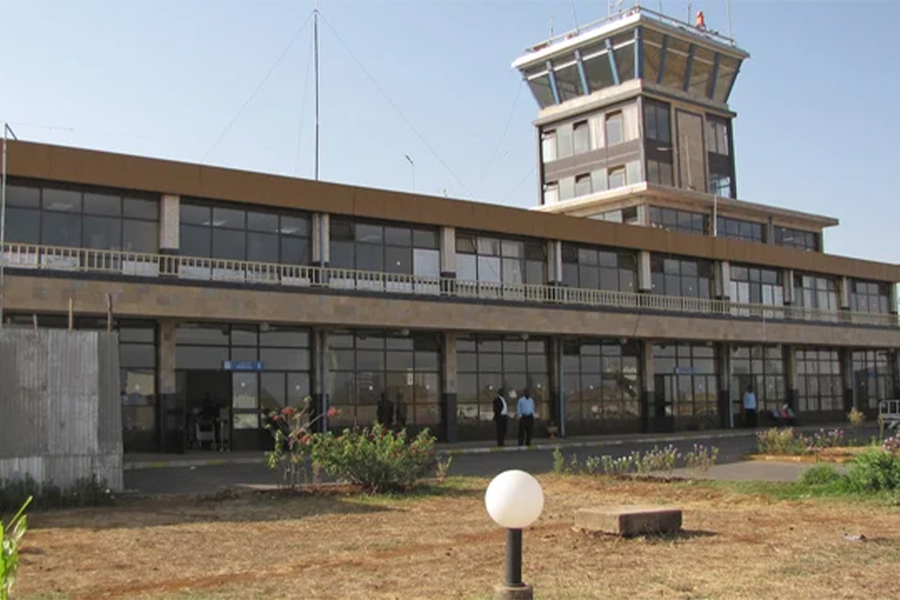
Most airports under the Ethiopian Airlines Group (EAG) lack master plans, and some op...
Jul 19 , 2026 . By NAHOM AYELE
Judges at the Federal High Court have struck down an amendment that the Ministry of E...
Jul 19 , 2026 . By BEZAWIT HULUAGER
Addis Abeba is moving to force its money through the wires. A draft directive from th...







 Loading your updates...