

View From Arada | Sep 11,2020



Feb 11 , 2023
By Eden Sahle
Recently, I spent some time with a six-year-old boy born and bred in the United States, who made his very first trip with his parents. As he visited various places during his stay, I was curious to know what he learnt about the country. He said people in Ethiopia are sad and cry a lot because of the multiple problems they share. I was shocked and impressed by his truthful observation at such a young age.
Indeed, Ethiopians are no strangers to collective and generational trauma that continues to shatter and divide the basic fabric of society. We have adapted to one crisis after another which sometimes elevates to an existential threat. The construction of the communal has been broken, fracturing the common identity and leading to oblivion to history and responsibility.
Trauma is a core part of our society. People do not necessarily need to experience the crisis first-hand to feel its impact. The revolving destructive and negative patterns have held back society from transformation, affecting institutions and communities. We continue to face catastrophic incidents inevitably entangled with politics, religion and the economy. We are still unaware of the magnitude of conflicts, injustices and losses we might experience.
After a predicament, permanent memories of the dreadful experience that can easily be triggered are retained. People live in anxiety, distrust, and pervasive fear. A crisis is normalized even though its immensity is on the upsurge. The massive gap between opposing beliefs and political ideologies seems to amount to no discussion likely to bring a positive impact as everyone wants it their way.
The lack of compromise, fairness and sustainability makes society live in the uncertainty of tomorrow. While the impact of a crisis on mental health can vary, there is a shared agreement among psychologists that a distressing experience has the ability to collectively influence psychological well-being, living on edge and being skeptical about the future.
In a society where pain is common, it becomes normalized. Anxiety may be contagious as everyone begins to live in a state of chronic stress. Individuals may suffer and entire communities struggle to move forward after a traumatic encounter.
Whether worried about safety, not being able to practice their religion or dawdling with financial stress, the crisis creates an anxious society whose mental health is collectively affected.
The endless chaos composed of multiple combats threatens the sense of unity. The inability to compromise, with a "my way or no way" attitude, creates conspiracies. Several narratives are hyped in social media to saturate as much attention as they can. The nature and depth of these traumas imprint themselves on the unconscious and determine how we experience incidents.
Sociologists teach about the power of an individual to impact many. They have discovered even the most isolated individual has the ability to influence 10,000 people in a lifetime. Could it be the bad influence of traumatised communities, leading to more division and chaos?
Staying glued to a broken system damages physical, emotional and mental health. Listening to people argue about an eye for an eye response to a horrific event increases feelings of despair. Instead, the public can benefit from converting shared pain into solidarity promoting healing.
Studies also show that shared pain can actually allow communities to band together for the greater good. The Japanese art of putting broken pottery pieces back together with gold — Kintsugi is built on the idea by embracing flaws and imperfections, a stronger and more beautiful piece of art is created. Every break is unique and the 400-year-old technique particularly highlights those breaks with gold as a part of the design. Using this as a metaphor for healing ourselves teaches us sometimes in the process of repairing things that have broken, we actually create something more unique and resilient.
As a person who is said to influence thousands, imagine the difference each one of us could make if we invest this time to bring positive change. It could allow communities to practice altruism, social support, cohesion and positive social values. We might prevent scaring the next generation such as the six-year-old boy I met who is not so keen on coming back.
As long as we are convinced that pain cannot be used to bring constructive influence, we will be stuck. This needs to change. Traumatized communities can still work on their differences. We need to stop focusing on future disasters and use shared pain and suffering for collective healing. This does not mean pretending that everything will be okay, instead, acknowledging major and small friction in a hyper-diversified society friction and dealing with it.
PUBLISHED ON
Feb 11,2023 [ VOL
23 , NO
1189]
View From Arada | Sep 11,2020
View From Arada | Jun 28,2025
Viewpoints | Mar 26,2022
Viewpoints | Aug 10,2024
Sunday with Eden | Jun 24,2023

Sunday with Eden | Sep 16,2023
Life Matters | May 24,2025
Life Matters | Apr 10,2026
Radar |
Sunday with Eden | Jan 14,2023

Photo Gallery | 191002 Views | May 06,2019

Photo Gallery | 180785 Views | Apr 26,2019

Photo Gallery | 177456 Views | Oct 06,2021

My Opinion | 143095 Views | Aug 14,2021






Dec 22 , 2024 . By TIZITA SHEWAFERAW
Charged with transforming colossal state-owned enterprises into modern and competitiv...

Aug 18 , 2024 . By AKSAH ITALO
Although predictable Yonas Zerihun's job in the ride-hailing service is not immune to...

Jul 28 , 2024 . By TIZITA SHEWAFERAW
Unhabitual, perhaps too many, Samuel Gebreyohannes, 38, used to occasionally enjoy a couple of beers at breakfast. However, he recently swit...

Jul 13 , 2024 . By AKSAH ITALO
Investors who rely on tractors, trucks, and field vehicles for commuting, transporting commodities, and f...
Jul 4 , 2026
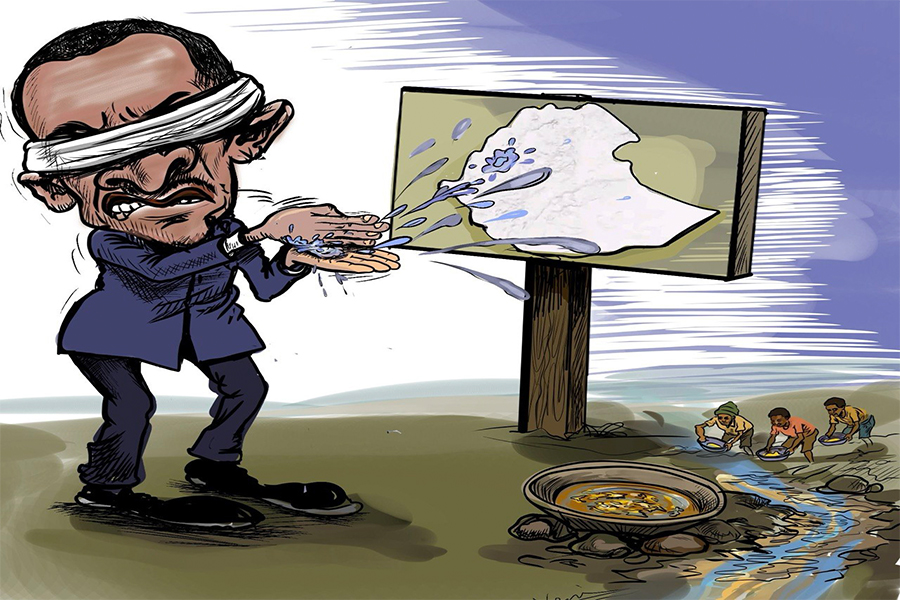
In the goldfields of the Benishangul-Gumuz Regional State, Ethiopia's balance-of-paym...
Jun 27 , 2026
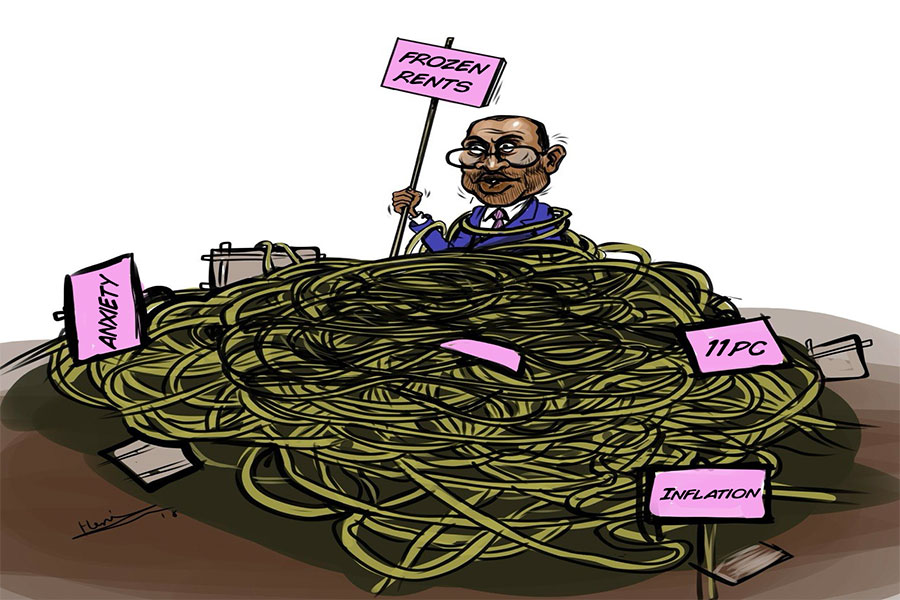
The federal legislative house rushed through one of the country's most contentious ho...
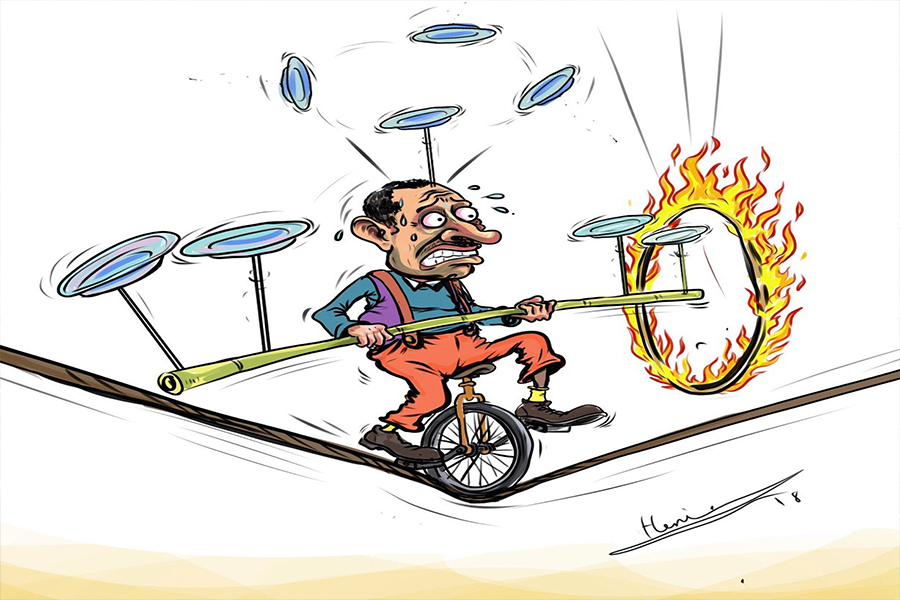
When Parliament takes up the appropriation bill, federal legislators will receive a d...
Jun 13 , 2026
The recent policy decision to fully open freight forwarding to foreign capital may be...
Jul 7 , 2026
The health sector remains underprovided despite rising public spending, Prime Ministe...
Jul 7 , 2026
Prime Minister Abiy Ahmed (PhD) delivered one of his bluntest rebukes yet to the coun...
Jul 7 , 2026
Prime Minister Abiy answered his critics with a mix of gratitude and edge, thanking l...

Jul 7 , 2026
A ruling-party lawmaker, Mohammed Ahmed, called the Chamber to its feet for Prime Min...






 Loading your updates...