

Fortune News | Jun 27,2020



Mar 5 , 2022
By Jim O’Neill
The savage fighting in Ukraine has led many to wonder whether Russian President Vladimir Putin’s supposed strategic brilliance is all that it was chalked up to be. Though Putin anticipated that NATO would not respond militarily to his war, he seems to have underestimated the West’s capacity for solidarity. The United States and its allies and partners have already implemented unprecedented severe economic and financial sanctions against Putin’s regime, and the decision to block Russia’s central bank from international financial markets (effectively freezing the country’s foreign-exchange reserves) is arguably a masterstroke.
True, Russia has diversified its reserves away from the dollar in recent years. But judging by the scale of the international response and its immediate impact on the Russian economy, this strategy appears to have been insufficient to maintain access to the financing it needs. Even Switzerland has announced that it will participate in the new sanctions regime by freezing Russian assets. Unless Russia has considerable reserves held in Chinese renminbi or currencies issued by other countries that still support it, the squeeze on its economy will be unavoidable.
Whatever Russia’s response, the question now is what these moves by the West—and by almost all the world’s financial centres—will mean for future monetary affairs and the international monetary system. Are we witnessing a further consolidation of US power through the dollar-dominated system, or will this episode set the stage for the kind of monetary and financial fragmentation that some analysts have long anticipated?
Having written about the future of the dollar myself, I cannot recall a previous policy announcement that raised the global monetary stakes as much as this one has. The immediate effect of the Russia sanctions has been to highlight the US’ continued dominance. But it also may force many emerging economies to reconsider the textbook approach to building up foreign-exchange reserves to protect against economic crises. The need for such self-insurance was the big lesson from the 1997-98 Asian financial crisis. But now that Russia’s central bank has lost the ability to convert its foreign currencies into rubles, the strategy would appear to come with some new risks.
This is particularly true for countries whose aspirations might run afoul of the Western democratic world’s prevailing norms—as threatening and then invading a smaller neighbour obviously does. It does not take a deep thinker to appreciate that China must be alarmed and displeased by the audacity of both Russia’s war and the Western reaction to it. If China were to pursue military action against Taiwan, it, too, could expect to lose much of its access to the global financial system.
One can see why escaping this deep dependency on the Western-controlled currency system might now become a top priority for some countries. If renminbi, rubles, Indian rupees, and other currencies were more convertible for other countries, a fundamentally different international monetary system could emerge - one in which the kinds of sanctions being imposed on Russia would not be so effective. But this scenario remains unlikely, for two related reasons.
First, there is a reason why China has not done more to elevate the renminbi as an international currency. At the many conferences on the global monetary order that I have attended, the message from Chinese scholars has long been clear: Their preferred method for improving the current system is to expand the role of special drawing rights, the International Monetary Fund’s reserve asset.
This makes sense when one considers what internationalising the renminbi would entail. Because China would need to allow much greater freedom in the offshore use of its currency, it would have to give up its ability to maintain capital controls. So far, it has been unwilling to do this. Yet, without capital-account liberalisation, no other country - not even one as financially desperate as Russia - would want to hold its reserves in renminbi.
Second, even if a major power like China were to respond to today’s changing circumstances by pursuing major financial reforms, it would still have to offer credible assurances regarding the safety and liquidity of reserves held outside Western currencies. Otherwise, why would anyone take the risk?
Again, China seems unlikely to pursue any reforms that would require radical changes to its own economic and regulatory model. If China did bite the bullet and open its financial system, structural changes in the global monetary order would almost certainly follow. But, even in that case, the changes would not happen in time to spare Russia the consequences of its president’s appalling behaviour.
PUBLISHED ON
Mar 05,2022 [ VOL
22 , NO
1140]

Fortune News | Jun 27,2020
Radar | Feb 04,2023

Radar | Jun 07,2025
Radar | Oct 31,2020
Fortune News | Aug 22,2020
Fortune News | Oct 17,2020
Fortune News | Jul 03,2021
Fortune News | Jun 29,2025
Agenda |
Sunday with Eden | Aug 29,2020

Photo Gallery | 191415 Views | May 06,2019

Photo Gallery | 181204 Views | Apr 26,2019

Photo Gallery | 177876 Views | Oct 06,2021

My Opinion | 143466 Views | Aug 14,2021





Dec 22 , 2024 . By TIZITA SHEWAFERAW
Charged with transforming colossal state-owned enterprises into modern and competitiv...
Aug 18 , 2024 . By AKSAH ITALO
Although predictable Yonas Zerihun's job in the ride-hailing service is not immune to...

Jul 28 , 2024 . By TIZITA SHEWAFERAW
Unhabitual, perhaps too many, Samuel Gebreyohannes, 38, used to occasionally enjoy a couple of beers at breakfast. However, he recently swit...

Jul 13 , 2024 . By AKSAH ITALO
Investors who rely on tractors, trucks, and field vehicles for commuting, transporting commodities, and f...
Jul 11 , 2026
At a market stall, reform arrives without a communique. It comes as a higher transpor...
Jul 4 , 2026
In the goldfields of the Benishangul-Gumuz Regional State, Ethiopia's balance-of-paym...
Jun 27 , 2026
The federal legislative house rushed through one of the country's most contentious ho...
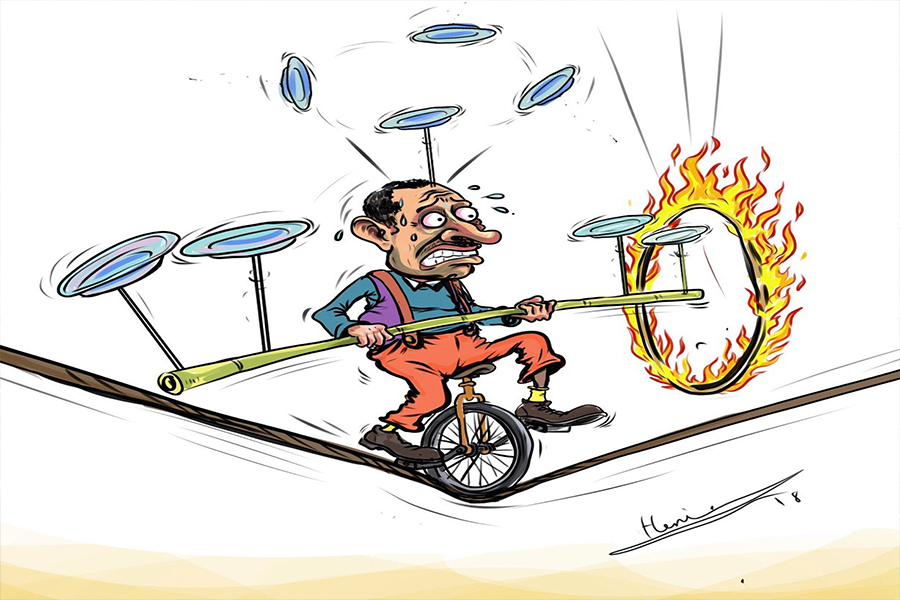
When Parliament takes up the appropriation bill, federal legislators will receive a d...
Jul 12 , 2026 . By BEZAWIT HULUAGER
When a WhatsApp notice told about 60 households at a gated community on the outskirts...
Jul 12 , 2026 . By BEZAWIT HULUAGER
The Addis Abeba City Administration has begun charging a municipal tax on every hotel...
Jul 12 , 2026 . By BEZAWIT HULUAGER
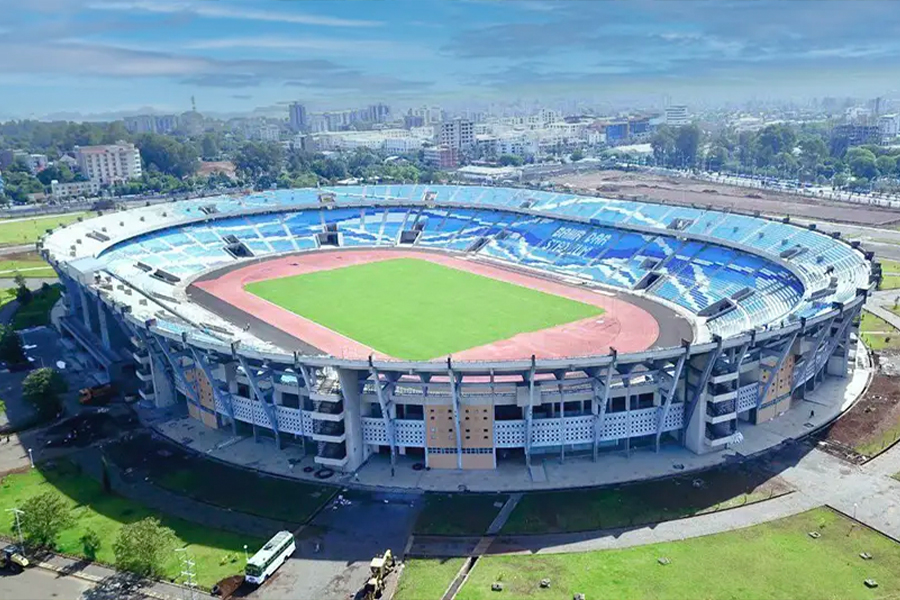
Bahir Dar International Stadium is nearing completion, and the people building it say...
Jul 12 , 2026 . By BEZAWIT HULUAGER
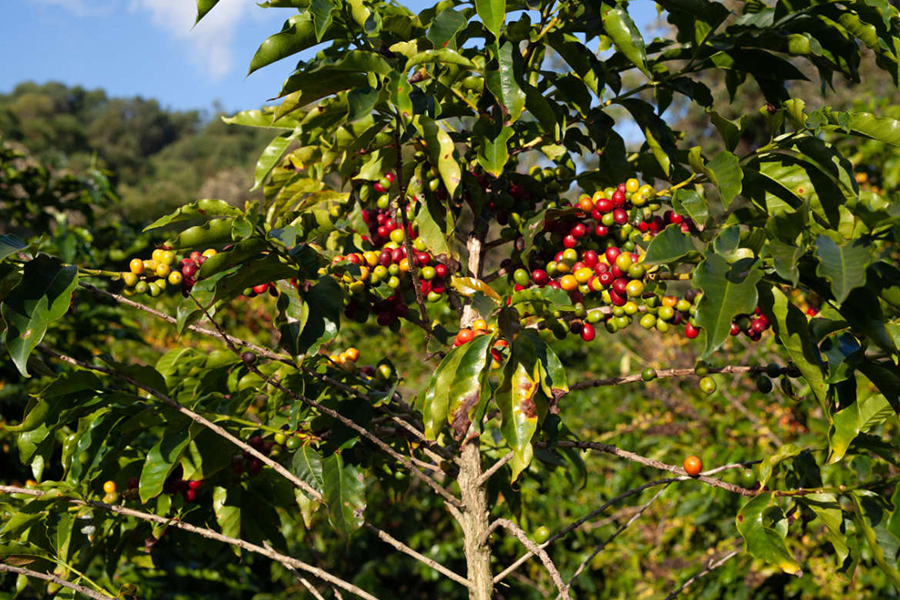
Federal regulators of the coffee sector are preparing a fund to shield growers and ex...





 Loading your updates...