
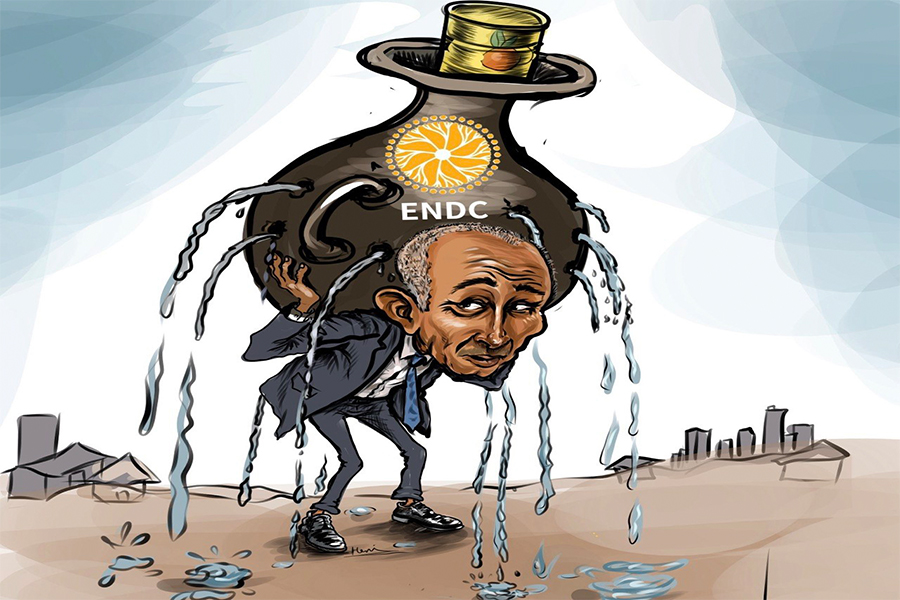
Editorial | May 02,2026



Nov 20 , 2021
By Abreham Ketema
The past five years have been uneasy for Ethiopia. It began with political instability that led to widespread violence across the country. For a brief time in 2018 and 2019, things seemed to improve, but it has only been proven to be the lull before the storm.
Since November 2020, a war broke out in the northern part of the country between armed forces operating out of Tigray Regional State and the federal government and its allies. The immediate cause may have been the attack on the Northern Command of the Ethiopian military station in Tigray, but the disaster has been long in the making, especially after disagreements over the 2021 election arose. The war has continued to this day.
Ostensibly, the catastrophic devastation has been taking place in many parts of our country, in Tigray, Oromia, Amhara and Benshingul-Gumuz regional states due to the ongoing war between several stakeholders. It is not just combatants that are losing their lives. Civilians, especially women and children, are among the major victims of violence. Widespread rape and massacres against innocent civilians have been recorded while millions have been displaced from their homes. The humanitarian crisis has only continued to deepen since then. People are starving, access to basic services is hard to come by for millions of people in the Amhara, Afar and Tigray regional states.
Critically, the fate of our nation, and its people, is in a dilemma. There is grave political uncertainty. The circumstances are worrying for millions of people across Ethiopia and the surrounding neighbours, which will undoubtedly face the stress. It has been heartbreaking, especially considering the potential of the economy and centrality of Ethiopia to the stability of East Africa.
With the message of hope, the preamble to our fundamental moral values reminds us that war has never been a solution. If it was, Ethiopia would have many of its problems addressed by now as several wars have been fought over the past half a century. Pursuing peace through dialogue brings an ultimate deal that could revive the nation into openness and unity on the ideas to agree on the differences. Nothing is more essential than peace and shared values.
Some communities, civic organisations and leaders have been advocating for peaceful resolutions but some have not sufficiently acted in a coordinated way to fulfil their duties. Fortunately, their role in influencing the people to realise the essence of humanity is tremendous and can bring favourable results. Advocating in an organised way and with unwavering tenacity could translate into a movement and commitment to nurture national unity. Centrist voices must come together to act in the name of peace.
The pace of an inclusive national dialogue must be increased significantly to maintain the social fabric of our country. Falling in this mission will have unimaginable consequences. Success in this is needed to avert what could be one the greatest humanitarian disasters in recent memory.
The role of community leaders and civic organisations are needed more than at any time before. They need to use all of their available platforms to promote and organise national inclusive peace dialogues, condemn parties who reject the call, facilitate humanitarian aid to displaced communities, establish neutral ground that facilitates an investigation of atrocities and urge stakeholders to respect national and international laws.
We do not have time to waste. We have already lost a great deal. The loss of human life and property is too high, but there is still hope for rebuilding and reconciling. The economy could be salvaged, and the well being of citizens improve just yet. All that is needed is negotiation with guiding principles.
PUBLISHED ON
Nov 20,2021 [ VOL
22 , NO
1125]

Editorial | May 02,2026
Life Matters | Apr 26,2019

Viewpoints | Aug 29,2020
Viewpoints | Jun 20,2020

My Opinion | Jul 04,2026
Radar | Jun 14,2026

My Opinion | May 08,2021
Radar | Oct 01,2022
Radar | Apr 21,2024
Covid-19 | May 31,2020

Photo Gallery | 191640 Views | May 06,2019

Photo Gallery | 181397 Views | Apr 26,2019

Photo Gallery | 178101 Views | Oct 06,2021
My Opinion | 143654 Views | Aug 14,2021





Dec 22 , 2024 . By TIZITA SHEWAFERAW
Charged with transforming colossal state-owned enterprises into modern and competitiv...

Aug 18 , 2024 . By AKSAH ITALO
Although predictable Yonas Zerihun's job in the ride-hailing service is not immune to...

Jul 28 , 2024 . By TIZITA SHEWAFERAW
Unhabitual, perhaps too many, Samuel Gebreyohannes, 38, used to occasionally enjoy a couple of beers at breakfast. However, he recently swit...

Jul 13 , 2024 . By AKSAH ITALO
Investors who rely on tractors, trucks, and field vehicles for commuting, transporting commodities, and f...
Jul 18 , 2026
Pressed in Parliament on jobs and household incomes, Prime Minister Abiy Ahmed (PhD)...

Jul 11 , 2026
At a market stall, reform arrives without a communique. It comes as a higher transpor...
Jul 4 , 2026
In the goldfields of the Benishangul-Gumuz Regional State, Ethiopia's balance-of-paym...
Jun 27 , 2026
The federal legislative house rushed through one of the country's most contentious ho...
Jul 19 , 2026 . By BEZAWIT HULUAGER
Bureaus, agencies and institutions under the Addis Abeba City Administration are sitt...
Jul 19 , 2026 . By NAHOM AYELE
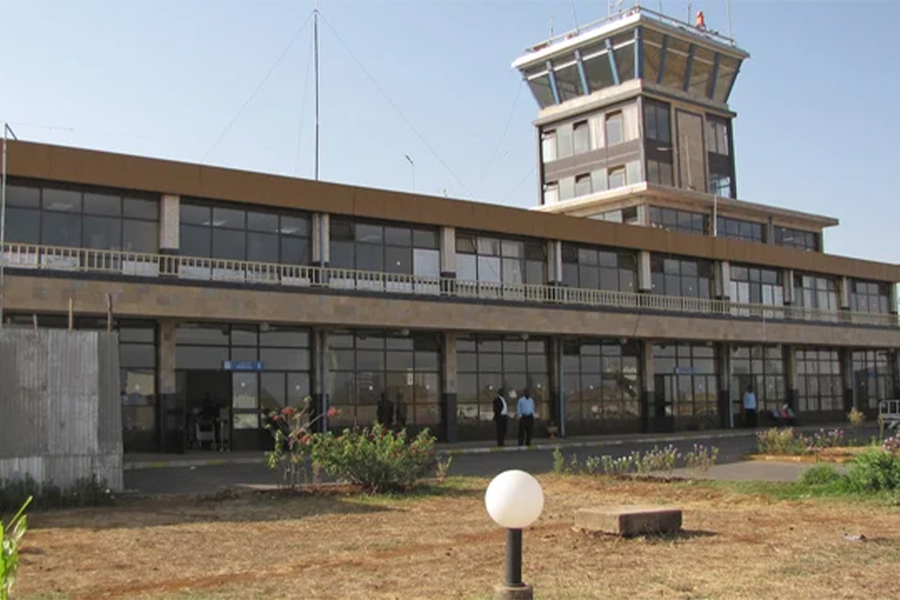
Most airports under the Ethiopian Airlines Group (EAG) lack master plans, and some op...
Jul 19 , 2026 . By NAHOM AYELE
Judges at the Federal High Court have struck down an amendment that the Ministry of E...
Jul 19 , 2026 . By BEZAWIT HULUAGER
Addis Abeba is moving to force its money through the wires. A draft directive from th...








 Loading your updates...