
Agenda | Nov 28,2020



Nov 6 , 2021
By Christian Tesfaye
The small country of Rwanda, I found out in a recent visit, has figured out urban tourism. The main attraction of its capital, Kigali, is the Genocide Memorial, an inspiring museum than merely a sad one, and the Kigali Convention Centre, which the locals sometimes refer to as the “nipple,” given the way it protrudes from one of the city’s many hills.
But the smartest attraction is a tour of the more modest part of the city that starts with the Nyamirambo Women’s Centre. The Centre was established in 2007 to bring together women in vulnerable situations and provide them with education and employment opportunities, mainly making clothes. Their handiwork is sold under a brand called Umutima, and all proceeds go to them.
The Centre is nonetheless only part of the tour package. It all starts with a guide introducing to visitors the history of Nyamirambo, one of the oldest parts of Kigali, and the social mission behind the Centre. A small-sized printout is handed out with a translation of some of the most important words for navigating the city. Muraho means “hello,” Nitwa is “My name is …” and Muzungo means “white person.”
Then the guide starts walking tourists through Nyamirambo, a much less green and posh part of town than Kigali’s business district. The local dairy shop is visited, an important retail outlet as milk is a popular drink in the country (they say, “a Rwandan always drinks a glass of milk a day.”) Then it is to a local beauty salon, where women sit on the floor to get their hair braided and the stylist is seated on nothing more sophisticated than a couch. This sort of amateur hair salon must feel otherworldly for someone with limited exposure to the third-world.
The tour continues, showing tourists local mosques, street architecture and delicacies. It climaxes with a lunch hosted by a Rwandan family inside their living rooms. It is a modest buffet that serves as an introduction to the country’s local foods.
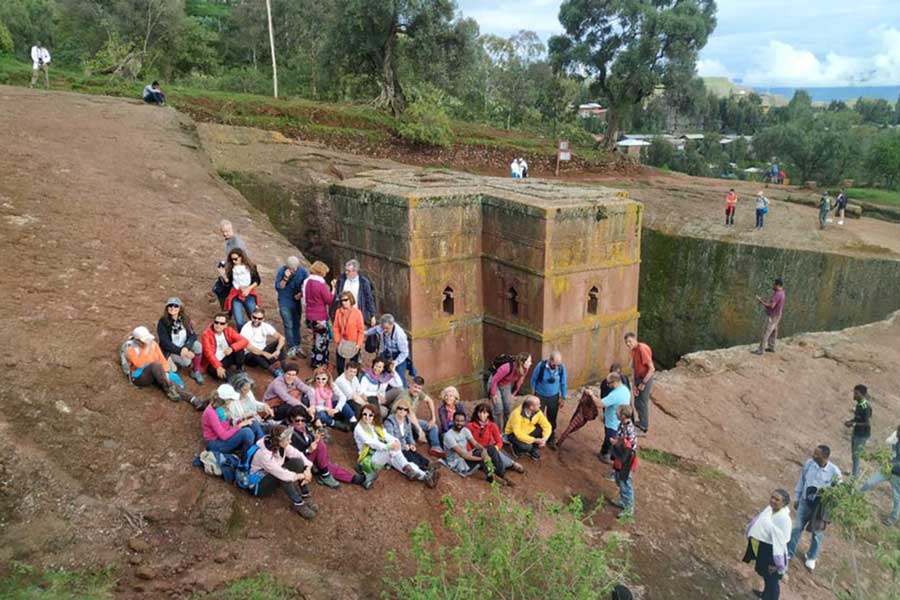
Such a tour sounds shallow. Can it ever compare to sightseeing the likes of Lalibela? In a way, yes. The Rwandans identified a crucial element of tourism. People do not visit other places of the world merely for the sights. They also want to see how people with a different culture, language and history behave and live – what they look like in their natural environment. For a tourist looking to get the most out of their week-long visit, a tour of urban areas with a guide in a safe environment would make them feel rewarded by the experience. They will have no problem forking over 18 dollars for the tour, as I did.
Rwanda is an example of a country that, though small, does many things well when it comes to detail. It is impressive for a sub-Saharan African country, and others should emulate its resourcefulness.
The tour, for instance, could be adapted very easily in Addis Abeba. It would not be too expensive for it to work except to make some of the historic parts of town, such as Piassa, cleaner and safer for non-nationals. A local guide for tourists of a small neighbourhood, the mom-and-pop bakeries, pubs, spice stores and lunch at the house of an Ethiopian household should be attractive enough. Throw a social mission in there – maybe a portion of the tour’s fee goes to feed the needy – then we are ready to go.
The fancy Sheratons and Hiltons and posh 2000 Habesha and Yod Abyssinia restaurants are good. But sometimes, the small things that cannot be found anywhere else are the greatest attractions, and those can be presented without much toil or cost.
PUBLISHED ON
Nov 06,2021 [ VOL
22 , NO
1123]
Agenda | Nov 28,2020

Radar | Mar 20,2021

Verbatim | Jun 24,2023

Sunday with Eden | Sep 10,2023

Featured | Jan 17,2026

Sunday with Eden | May 23,2021
Fortune News | Mar 05,2022
Sunday with Eden | Jun 19,2021
Agenda | Sep 28,2024
Radar | Sep 28,2019

Photo Gallery | 190812 Views | May 06,2019

Photo Gallery | 180578 Views | Apr 26,2019

Photo Gallery | 177248 Views | Oct 06,2021

My Opinion | 142927 Views | Aug 14,2021






Dec 22 , 2024 . By TIZITA SHEWAFERAW
Charged with transforming colossal state-owned enterprises into modern and competitiv...

Aug 18 , 2024 . By AKSAH ITALO
Although predictable Yonas Zerihun's job in the ride-hailing service is not immune to...

Jul 28 , 2024 . By TIZITA SHEWAFERAW
Unhabitual, perhaps too many, Samuel Gebreyohannes, 38, used to occasionally enjoy a couple of beers at breakfast. However, he recently swit...

Jul 13 , 2024 . By AKSAH ITALO
Investors who rely on tractors, trucks, and field vehicles for commuting, transporting commodities, and f...
Jul 4 , 2026
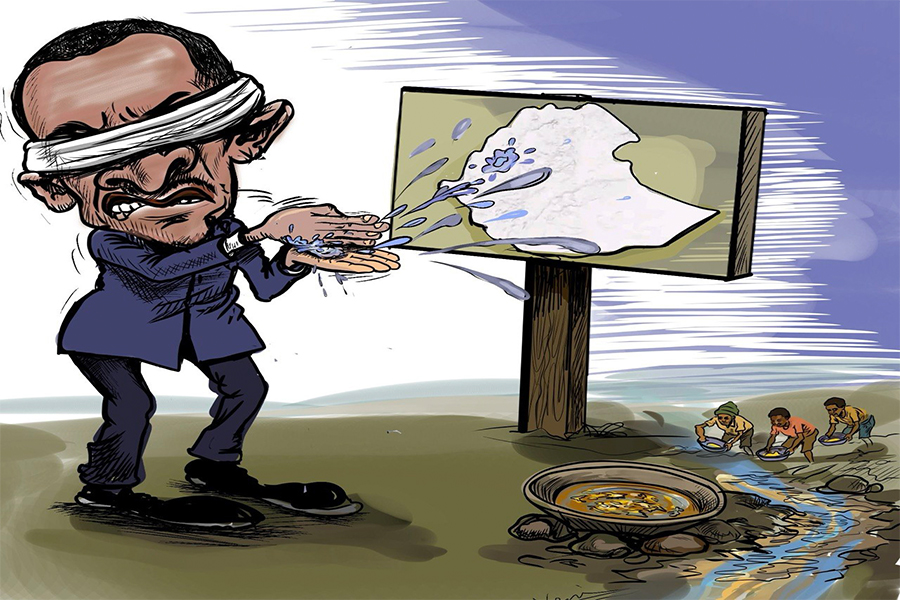
In the goldfields of the Benishangul-Gumuz Regional State, Ethiopia's balance-of-paym...
Jun 27 , 2026
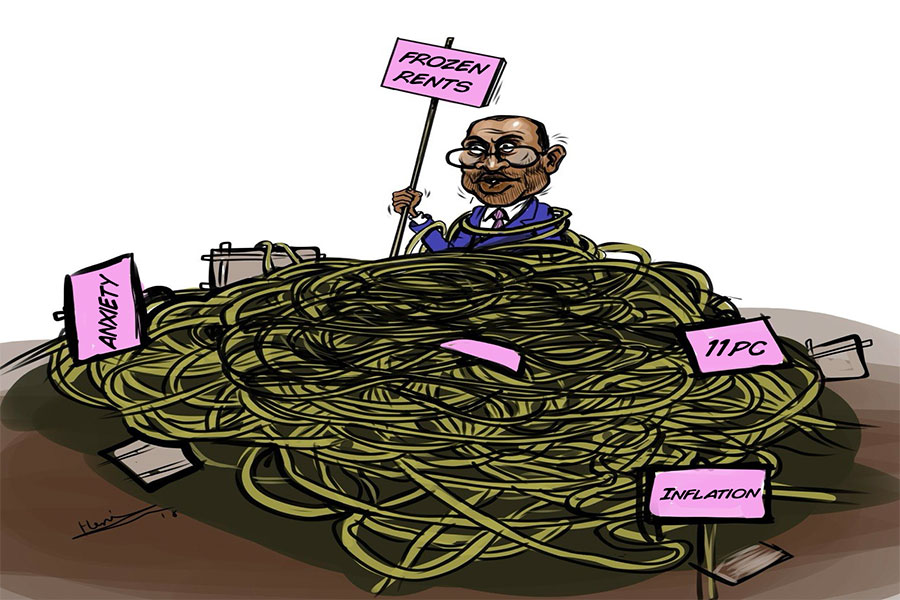
The federal legislative house rushed through one of the country's most contentious ho...
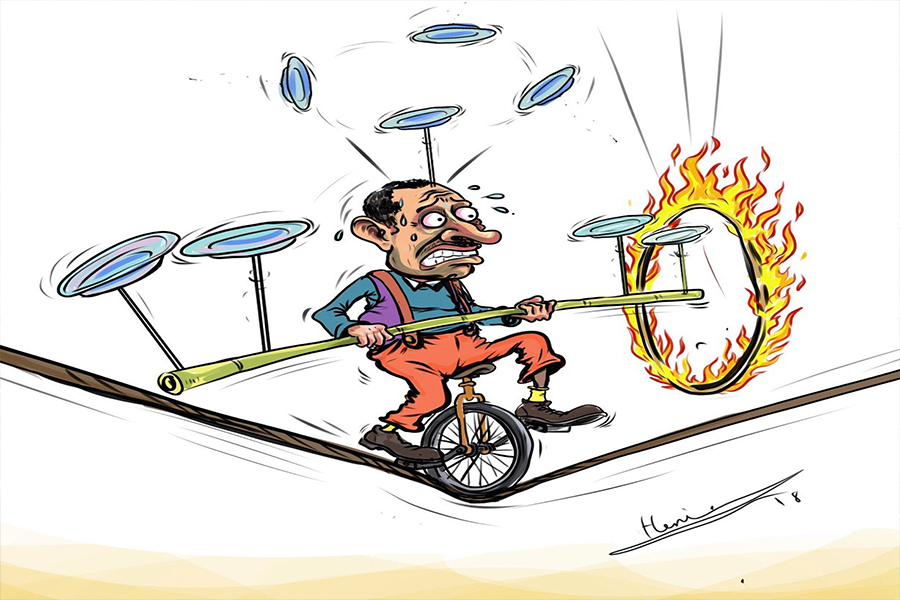
When Parliament takes up the appropriation bill, federal legislators will receive a d...
Jun 13 , 2026
The recent policy decision to fully open freight forwarding to foreign capital may be...
Jul 7 , 2026
The health sector remains underprovided despite rising public spending, Prime Ministe...
Jul 7 , 2026
Prime Minister Abiy Ahmed (PhD) delivered one of his bluntest rebukes yet to the coun...
Jul 7 , 2026
Prime Minister Abiy answered his critics with a mix of gratitude and edge, thanking l...

Jul 7 , 2026
A ruling-party lawmaker, Mohammed Ahmed, called the Chamber to its feet for Prime Min...







 Loading your updates...