
Editorial | Mar 21,2026



Apr 3 , 2021
By Asseged G. Medhin
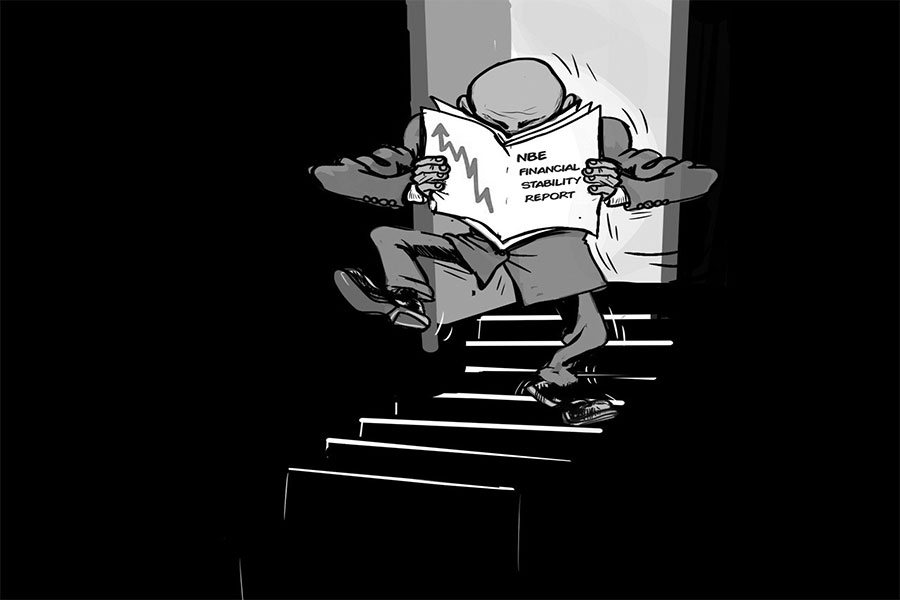
The general election this year brings with it much hope, but so does it bring a significant amount of risks related to political violence. This can quickly overflow into the financial sector, which serves as a conduit for distributing wealth. But the relevance of the insurance sector for the overall stability of the economy by outlining the sources of risk and vulnerability is not only the issue of players in the financial sector. We need to craft a seasonal strategy to manage both emerging and existing risks. This can start by mapping them out.
Our financial litmus paper should indicate whether there is a growing inter-linkage between insurers and banks; whether the socioeconomic balance can be maintained during unrest, and whether individual and organisational risk behavior can be analysed in a different scenario. These approaches and seasonal strategies will save the nation’s resources from man-made catastrophes. The rationale behind this is to pinpoint and identify some critical challenges for the insurance sector and how it could play a role in economic resilience.
It is challenging to nip political violence in the bud. But a comprehensive approach that involves political engagement can be augmented by a financial sector resilient to such unexpected changes. Economic advisors and consulting firms in the Ethiopian economy should embrace aspects of political risk as a potential factor in planning and implementation.
The sources of risk and vulnerability facing the banking and insurance sectors do not stop here. As new entrants to the sector increase with resources, a dynamic regulation and management approach have to be worked out. The government ought to provide more space for discussion and work with the financial sector to minimise the potential for legal and operational fallout in the event of unrest in the upcoming national election.
In recent years, the links that have been developing over time between the insurance and banking sectors have become wide. The growth of the insurance industry, in the introduction of new products and services, has deviated from that of banking. This implies that less attention is given to the insurance sector in terms of the broader capability of the sector, which will have consequences in institutionalising risk management.
Financial stability is a somewhat elusive concept, as is demonstrated by the absence of a widely recognised definition. While it is evident when a financial system is unstable or in a crisis situation, it is much more challenging to assess in normal circumstances whether or not the system is moving toward instability. But the underpinning is that stability is a condition where the financial system can withstand shocks without giving way to processes that impair the allocation of savings to investments and the processing of payments in the economy.
This emphasises that in a situation of instability, the financial system would be unable to perform its basic task of providing the financing needed to support real economic processes. It also stresses that to safeguard financial stability, the system should be resilient to potential shocks from unrest and inflation, underproduction or failures along the supply chain.
We do not face a financial crisis thus far. Still, the economic growth for the last two consecutive years has not been resilient and neither has it given rise to a stable financial system that can stand on its two legs in the event of deregulation.
To rise above this unsatisfactory state of affairs, we need to establish a system where the insurance sector is closely integrated into the economy. Stability is not secured in a vacuum brimming with numbers, projections and comparisons to benchmarks. It is achieved by understanding all stakeholders' contexts in the economy, particularly the financial sector, which allows for economic exchanges to take place, savings to happen, and credit to be accessed.
We ought to be more vigilant to manage potential unrest that could have a paramount effect on the economy by putting a question mark around the financial sector's resilience and reliability.
PUBLISHED ON
Apr 03,2021 [ VOL
22 , NO
1092]

Editorial | Mar 21,2026

Radar | Aug 20,2022
Editorial | Dec 07,2024

Fortune News | Jan 07,2023

Fortune News | Nov 21,2020

Viewpoints | Mar 20,2021
Viewpoints | Jul 13,2020
Radar | Aug 26,2023
Sunday with Eden | Sep 11,2020
Fortune News | Jan 01,2022

Photo Gallery | 193850 Views | May 06,2019

Photo Gallery | 183737 Views | Apr 26,2019

Photo Gallery | 180644 Views | Oct 06,2021

My Opinion | 145994 Views | Aug 14,2021







Dec 22 , 2024 . By TIZITA SHEWAFERAW
Charged with transforming colossal state-owned enterprises into modern and competitiv...

Aug 18 , 2024 . By AKSAH ITALO
Although predictable Yonas Zerihun's job in the ride-hailing service is not immune to...

Jul 28 , 2024 . By TIZITA SHEWAFERAW
Unhabitual, perhaps too many, Samuel Gebreyohannes, 38, used to occasionally enjoy a couple of beers at breakfast. However, he recently swit...

Jul 13 , 2024 . By AKSAH ITALO
Investors who rely on tractors, trucks, and field vehicles for commuting, transporting commodities, and f...

Aug 28 , 2026
Every year, the Ministry of Education (MoE) sets a national examination. Every year,...
Aug 22 , 2026
A record is a strange thing to worry about. Federal trade officials have booked the b...

Aug 14 , 2026
Aschalew Fetene, known as “Ardi” and admired for his poetic depth, has built a ti...

Aug 8 , 2026
The World Bank asks readers to picture a mother in rural Ethiopia who has never held...
Aug 29 , 2026 . By BEZAWIT HULUAGER
The federal government is increasingly relying on Treasury bills (T-bills) to repay T...
Aug 29 , 2026 . By NAHOM AYELE
Judges on a Federal High Court bench have ordered D'Afrique, one of Addis Abeba's old...
The Ministry of Revenues wants to know not just who a taxpayer is but almost everythi...
Aug 29 , 2026 . By BEZAWIT HULUAGER
Electricity supplied from Ethiopia has helped halve Djibouti's power production costs...





 Loading your updates...