

My Opinion | Jun 20,2020



Nov 7 , 2020
By Belay Asrat
Leadership plays a central role in any human endeavor, be it family, organisation, political party or the nation at large. The way leaders use their imaginative capability to mobilise all resources, knowledge and skills toward the intended purpose could draw significant impact on the ultimate outcome.
The quality of leadership is the supreme factor in harnessing or hampering the progression of desired results. This is true of whatever form of politico-economic systems we find ourselves in, be it socialism, "revolutionary democracy" or, arguably, even monarchism.
We might agree that those regimes were categorically undemocratic. They were repressive of political and democratic rights. For some, comparing them is akin to a monkey beauty contest.
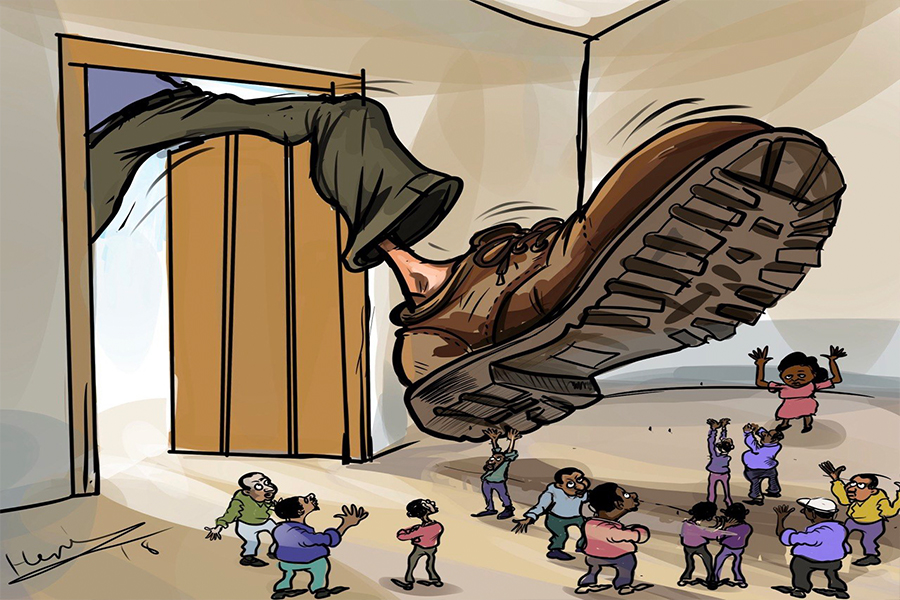
When all has been done and said, what this has meant to citizens is that they were exploited inhumanely, impoverished unbearably, and denied rights illicitly throughout the past century. But we, the citizens, dream of better days when democracy prevails, even under the polarised society we find ourselves in.
Certainly, there have been similarities between the subsequent leaders of the country. Most seem to be benign autocrats at first, but this never lasts. When they take power, they speak of being change agents and concede some changes as well. Soon, they consolidate power to protect their authority. Another similarity is that successive regimes make a point of regarding their predecessors and any reactionaries as the sources of ill – whether or not this is truly the case is beyond the point in many cases.
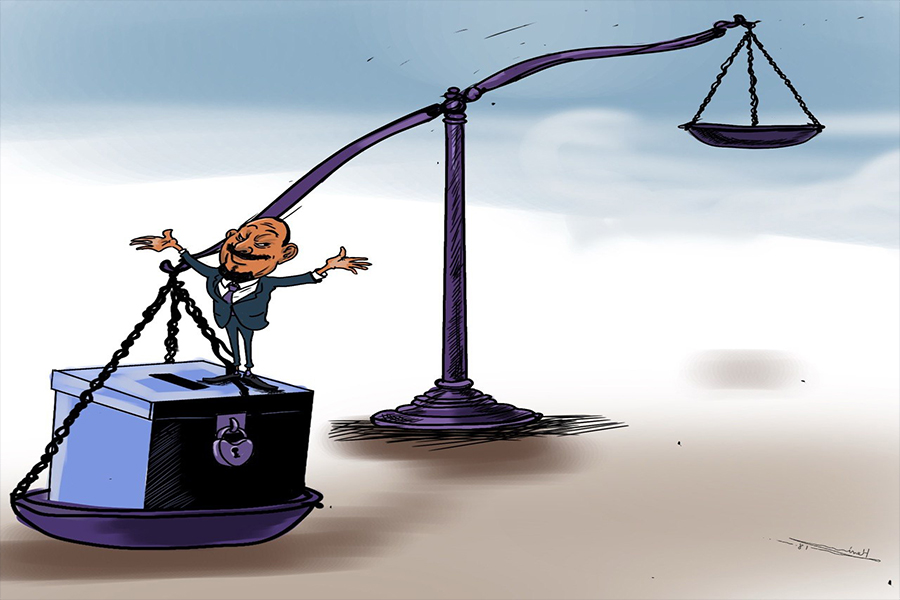
It is only ironic that Ethiopia has been through the main types of political systems, but with the exception of democracy. We have had a military dictatorship, a monarchy based on an ancient dynastic line, and a multiparty system, at least on paper. The historically rich nation has never had a democratically elected government.
Despite remaining poor and divided, our forefathers were effective at keeping the country free from external interference. Tragically, we have yet to capitalise on their heroic spirits to build solidarity, mutual coexistence, economic progress and political maturity.
Successive regimes, nonetheless, took power in the name of the people, particularly alluding to the proletariat and peasant classes, by initially decreeing some progressive measures. At a later stage, the automatic response is to revert back to a hegemonising impulse, imposing autocratic rule and dominating public life.
Mostly, the various observers begin to believe that the autocracy could become benevolent. This is a system that is perceived to be designed with the purpose of – despite the ambitions of those with state power - benefiting the population in terms of security and economics.
It may allow for some civil liberties or democratic decision-making to exist, and often makes preparations for a transition to genuine democracy during or after the term through the building of institutions in the economic sector. In contrast, a "malevolent" autocrat focuses on his supporters' "self-interest." Such a person only serves themselves as well as a specific group based on lingo-cultural, clan, religious or social class. This essentially is the political history of Africa.
As there is some experimental evidence around the world on the use of benevolent dictatorship – if indeed they can be termed as such, as there is confusion over the issue –it might be reasonable to give the benefit of the doubt on its importance to developing countries. No doubt, the initial stages of rapid economic development in the style of several of the Asian countries requires a mobilising of resources and social capital that democracy may not allow.
Arguably, this has been Singapore under Lee Kuan Yew and Rwanda under Paul Kagame. Both are known by their iron-fisted rule, but they have been able to transform their countries toward economic prosperity and unity, infused with a certain measure of inclusivity.
But there is great debate whether such governments and systems have indeed been benign and the outcomes justified. Indeed, in most cases, such systems start out as benign but get corrupted by the immense power they accumulate.
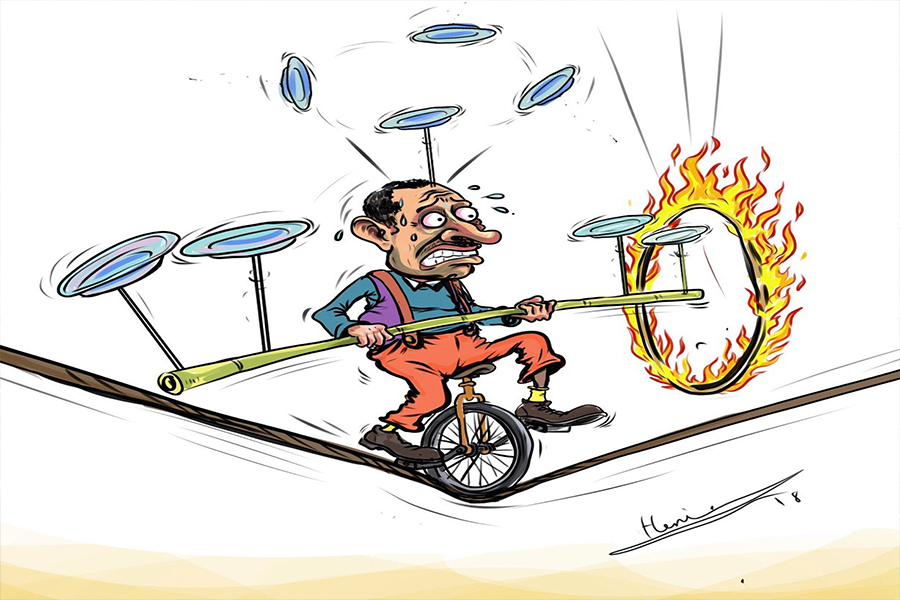
Since 2018, Ethiopia has been through political changes that were both a glimpse of hope and agony.
What is to happen next? Where is the political direction taking us? Will we be able to transition to democracy?
It remains the million-dollar question, subject to many variables. One of these factors is the matter of leadership. Another one that is overlooked is the public.
The ancient Greeks, the founders of democracy and modern Western civilisation, believed that there are three types of personalities in any society: idiots, tribespeople and the citizens.
The idiot is not necessarily intellectually indifferent but rather one who is selfish and self-centred. They are always out there for their personal interest and lack character or principles. The tribespeople also do not necessarily belong to any tribe but are people who are parochial in their world view. They are always suspicious and fearful of change and lack tolerance of people that do not accept their worldview.
The last sort is the citizen. It does not entail a legal or political status. It instead refers to the idea and ideal of citizenship, which is a choice. The citizen, according to the Greeks, is someone who has the skills and the knowledge to live a public life. The citizen knows his rights and duties to society. It is citizens that make up an informed society.
Indeed, leaders are also from one of these groups. But it is not a choice of a large majority of the public to be led by persons whose style of leadership is only their whims and whose driving force is to only fulfil their greediness. It is impossible to achieve proven social, political and economic development without effective leadership and true citizenship. Such leaders are few and far apart, but they exist and deserve our praise.
PUBLISHED ON
Nov 07,2020 [ VOL
21 , NO
1071]
My Opinion | Jun 20,2020
Commentaries | Apr 26,2019
Radar | Jul 13,2019
Radar | Oct 26,2019
Commentaries | Jul 07,2024
Fortune News | Jul 01,2023
Fortune News | Mar 21,2026
Editorial | Sep 04,2021
Fortune News | Sep 28,2024

Viewpoints | Aug 16,2020

Photo Gallery | 190619 Views | May 06,2019

Photo Gallery | 180358 Views | Apr 26,2019

Photo Gallery | 177036 Views | Oct 06,2021
My Opinion | 142742 Views | Aug 14,2021



Dec 22 , 2024 . By TIZITA SHEWAFERAW
Charged with transforming colossal state-owned enterprises into modern and competitiv...

Aug 18 , 2024 . By AKSAH ITALO
Although predictable Yonas Zerihun's job in the ride-hailing service is not immune to...

Jul 28 , 2024 . By TIZITA SHEWAFERAW
Unhabitual, perhaps too many, Samuel Gebreyohannes, 38, used to occasionally enjoy a couple of beers at breakfast. However, he recently swit...

Jul 13 , 2024 . By AKSAH ITALO
Investors who rely on tractors, trucks, and field vehicles for commuting, transporting commodities, and f...
Jun 27 , 2026
The federal legislative house rushed through one of the country's most contentious ho...
When Parliament takes up the appropriation bill, federal legislators will receive a d...
Jun 13 , 2026
The recent policy decision to fully open freight forwarding to foreign capital may be...
Jun 6 , 2026
For a political veteran as controversial as Getachew Reda, last week's national elect...
Jun 27 , 2026 . By BEZAWIT HULUAGER
A year after federal transport authorities restricted fossil-fuelled vehicles to clea...
Jun 27 , 2026 . By BEZAWIT HULUAGER
Ethiopia is selling more to the rest of Africa than ever before. The trouble is that...
Jun 27 , 2026 . By NAHOM AYELE
For thousands of Addis Abeba homeowners, a house they paid for years ago may still no...
Jun 27 , 2026 . By NAHOM AYELE
Shareholders and senior managers of Key Housing Finance Solutions Plc are turning on...







 Loading your updates...