



Apr 4 , 2020
By Matiwos Ensermu (PhD)
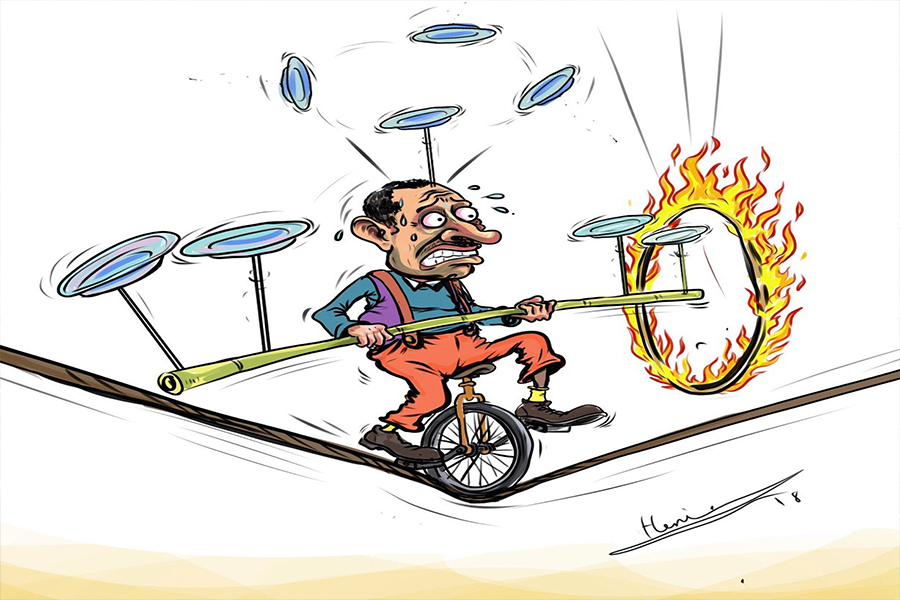
Unexpected natural and human-made disasters such as earthquakes and war create supply chain disruptions. These are high-impact, low-frequency events in the supply chain that change its structural design and significantly impact performance. The propagation of a disruption through a supply chain and its associated impacts matches a ripple effect.
Beyond its immediate symptoms, Novel Coronavirus (COVID-19) will have short and long-term effects on the economy as supply chain disruptions take place. This will mostly be as a result of restrictions to the movement of goods and people across borders globally and administrative demarcations locally in the effort to contain the spread of the virus.
Supply chain disruptions in one place will create ripple effects in the entire system, and recovery may take a long time, creating medium to long-term effects on the economy.
Managing this would require the critical capability to create cost-efficient supply chain protection and implement measures to recover supply chain disruptions and performance. Such actions should be taken before ripple effects lead to the unraveling of the entire economy.
Though Ethiopia’s economy has a track record of rapid growth for the past decade with signs of sustainability, its resilience in the event of supply chain disruption is questionable. The ability of the nation to recover quickly from shocks and the flexibility of the supply chain system to weather variations caused by an unprecedented crisis such as COVID-19 is unknown.
More than any other part of the economy, the supply chain along the agricultural sector is crucial to look after considering its importance not just to the economy but how it can directly affect people. Ethiopia occupies a low-value position in the global supply chain by primarily exporting agricultural products while also importing high-value, finished goods like cars and computers. This will make it especially difficult to sustain supply chain disruptions caused by COVID-19.
This will be especially the case considering that it could be months, if not years, before we can put the pandemic behind us. During this period of perhaps six months, Ethiopia can create a resilient supply chain in parallel with supporting the health facilities to combat the virus, all while boosting its agricultural production.
This is possible by taking a combination of measures aimed at ensuring the supply chain can weather the storm brought on by the pandemic. This can start by enlarging subsidies for Ethiopian farmers to boost agricultural production. Through this fund, improved seeds and fertilisers can be distributed at a lower subsidy than the status quo. This will be critical as price fluctuations in agricultural inputs hamper production.
The government would also need to avail warehouses for stocking agricultural commodities to buffer against future uncertainties, just in case COVID-19 continues to spread beyond one production season. The government can buy it from the farmers at a fixed or market price and stock it in warehouses, a move that would also address, to an extent, the market problem for agricultural products.
These two measures ensure that farmers are protected from price fluctuations. It allows them to focus on production instead of prices and the market. Such measures will also benefit the consumer market by making commodities affordable as the government sells them at market or subsidised prices from the warehouses.
To complement these measures, maximum retail prices should be set for essential commodities such asteff, onions, potatoes, edible oil and sugar at each stage of the supply chain and regulated based on cost-led pricing. This could be optimised by allocating profit margins along the supply chain based on the value that is added to the agricultural product until it reaches the final consumer. Such price setting should be regulated by the government through commodity tracking systems from farm gate to mill house.
As the government continues to fight to contain the spread of the Coronavirus, it should also develop plans to mitigate the impact of the pandemic on the economy, especially the supply chain. Over the next six months, the government should actively intervene in boosting agricultural production subsidies, hedging farmers and price regulations through maximum price setting at retail shops.
With committed leadership and multi-dimensional thinking, such measures can create a resilient supply chain for the short run that can underpin the industry and the service economy.


PUBLISHED ON
Apr 04,2020 [ VOL
21 , NO
1040]

Featured | Jun 22,2019
Fortune News | Jun 04,2022

Viewpoints | Jun 11,2022

Radar | Aug 29,2020

Advertorials | Dec 01,2024

Featured | Sep 10,2021

Fortune News | Jun 29,2019
Radar | Jan 15,2022

Fortune News | Jul 23,2022
Fortune News | Nov 29,2020

Photo Gallery | 191123 Views | May 06,2019

Photo Gallery | 180920 Views | Apr 26,2019

Photo Gallery | 177582 Views | Oct 06,2021

My Opinion | 143216 Views | Aug 14,2021







Dec 22 , 2024 . By TIZITA SHEWAFERAW
Charged with transforming colossal state-owned enterprises into modern and competitiv...

Aug 18 , 2024 . By AKSAH ITALO
Although predictable Yonas Zerihun's job in the ride-hailing service is not immune to...

Jul 28 , 2024 . By TIZITA SHEWAFERAW
Unhabitual, perhaps too many, Samuel Gebreyohannes, 38, used to occasionally enjoy a couple of beers at breakfast. However, he recently swit...

Jul 13 , 2024 . By AKSAH ITALO
Investors who rely on tractors, trucks, and field vehicles for commuting, transporting commodities, and f...

Jul 11 , 2026
At a market stall, reform arrives without a communique. It comes as a higher transpor...
Jul 4 , 2026
In the goldfields of the Benishangul-Gumuz Regional State, Ethiopia's balance-of-paym...
Jun 27 , 2026
The federal legislative house rushed through one of the country's most contentious ho...
When Parliament takes up the appropriation bill, federal legislators will receive a d...
Jul 12 , 2026 . By BEZAWIT HULUAGER
When a WhatsApp notice told about 60 households at a gated community on the outskirts...
Jul 12 , 2026 . By BEZAWIT HULUAGER
The Addis Abeba City Administration has begun charging a municipal tax on every hotel...

Jul 12 , 2026 . By BEZAWIT HULUAGER
Bahir Dar International Stadium is nearing completion, and the people building it say...
Jul 12 , 2026 . By BEZAWIT HULUAGER
Federal regulators of the coffee sector are preparing a fund to shield growers and ex...






 Loading your updates...