

Commentaries | Jun 01,2024



Mar 28 , 2020
By Eden Sahle
The terrifying fact about life is how little control we have, especially during times of crisis. It is comforting though to observe that, as many are realising, despite where we come from, we are all equal.
Watching the news has become unbearable. The Coronavirus pandemic (COVID-19) has led to hundreds of thousands contracting it and tens of thousands dying. The consequences to the global economy have not been something to baulk at either.
But as the world battles this pandemic, we cannot help but notice that humans are equal irrespective of their economic privileges. It is proving that humankind is indivisible. It is highlighting to us how we all need basic services and how every labourer is crucial to our society.
Loss of human life is painful, and people around the world are feeling a sense of loss and emotional pain as fellow humans are perishing at the hands of an invisible killer.
In the face of this global disaster, we have observed the best and worst sides of people, from those who are volunteering to come to the aid of their fellow human beings and those who are unfairly taking advantage of the crisis.
The current situation is yet another reminder for us to take a step back and embrace impartiality, to avoid the senseless hatred and discrimination we bestow on others based on race, religion, economic status or place of birth. Our energy and time will be of much greater use if we can concentrate on working to support one another.
Amid the crisis, a new horizon has opened. We are being reminded of the importance of ending human prejudice, the perception that one is superior to the other.
This is a disaster, by all means, but it has also opened up a new era to rectify discrimination and scrutinise our societal values. We must think carefully as individuals and support each other as a global community to effectively function as a society. A disciplined and civilised society creates a better world for everyone rather than hampering it.
It is unfortunate that as civilisation progressed, at least economically, it did not help people realise that all human beings, no matter their race, gender, religion or economic status, are equal. A crisis such as the COVID-19 pandemic has given us an opportunity to reconsider our assumptions.
It has shown us that we care about our own lives and about those of our fellow human beings. It has proven the need to stand on solid ground and love one another.
All nations are indeed left in darkness on how to put a stop to this global pandemic. At the same time, we have proven how every human has similar desires and problems. We are witnessing how individuals and societies across the world are similar, whether or not they find themselves in developed countries.
We have practically seen that we all hold the key to create a stable world for everyone to live in, free from any harm and fear. Our leaders have learned that they cannot do anything without global cooperation and that when disaster strikes, no nation can stand on its own.
The pandemic has proven that those who believed their nationality, race or gender makes them superior to others are merely fooling themselves. Flawed cultural perceptions that propagate prejudice have practical lessons to take here.
As much as the pandemic is paining us all, it can also be creating a new order of the world where human dignity and the value of life is revered above all else. The situation is igniting the courage of ordinary people to stand up for human lives and dignity in the face of the global health crisis that continues to destroy lives.
From prosperous to developing nations, no one was prepared for the intensity of the bereavement we suddenly have to live with. It will not be easy to come to terms with the loss of human lives around the world.
Hope lies in the countless people across the world who stood up for fighting the pandemic, risking their lives. There have been wars and pandemics that devastated entire generations, and yet humanity, thanks to its most determined and rational, has persevered.
We will overcome this too. And if we are lucky, we would have learned of the importance and dignity of human life.
PUBLISHED ON
Mar 28,2020 [ VOL
20 , NO
1039]
Commentaries | Jun 01,2024
Viewpoints | Sep 14,2024
Fortune News | Jan 09,2021

My Opinion | Dec 23,2023
Commentaries | Mar 04,2023
Viewpoints | Apr 26,2025
Viewpoints | Feb 12,2022
Commentaries | Jul 26,2025
Verbatim | Jun 17,2023
Fortune News | Sep 23,2023

Photo Gallery | 193209 Views | May 06,2019

Photo Gallery | 183097 Views | Apr 26,2019

Photo Gallery | 179886 Views | Oct 06,2021
My Opinion | 145338 Views | Aug 14,2021







Dec 22 , 2024 . By TIZITA SHEWAFERAW
Charged with transforming colossal state-owned enterprises into modern and competitiv...
Aug 18 , 2024 . By AKSAH ITALO
Although predictable Yonas Zerihun's job in the ride-hailing service is not immune to...
Jul 28 , 2024 . By TIZITA SHEWAFERAW
Unhabitual, perhaps too many, Samuel Gebreyohannes, 38, used to occasionally enjoy a couple of beers at breakfast. However, he recently swit...
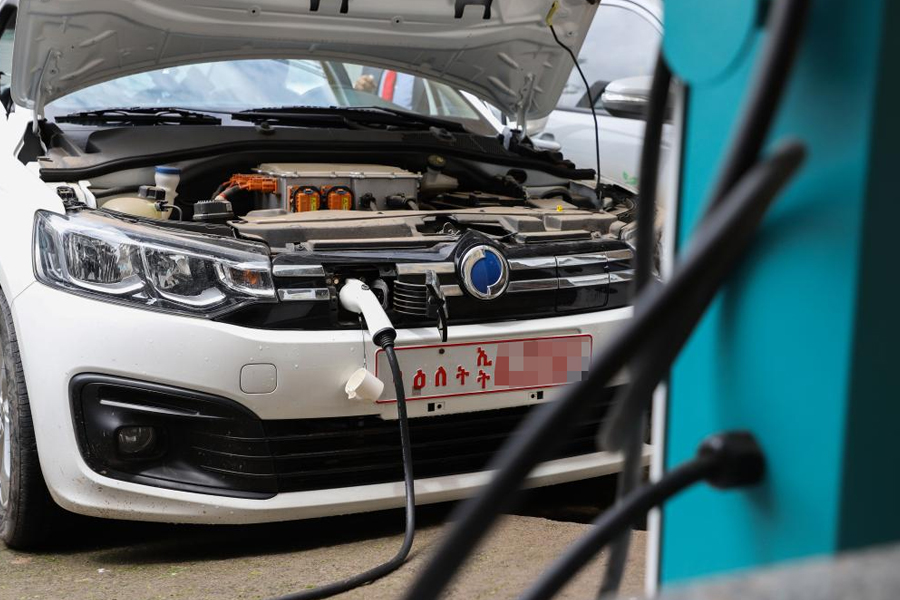
Jul 13 , 2024 . By AKSAH ITALO
Investors who rely on tractors, trucks, and field vehicles for commuting, transporting commodities, and f...
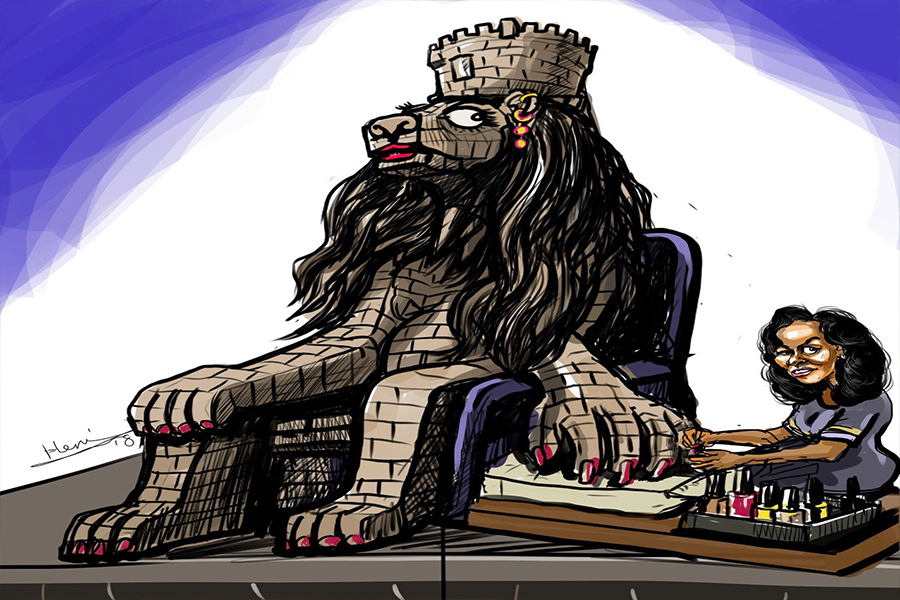
Aug 14 , 2026
Aschalew Fetene, known as “Ardi” and admired for his poetic depth, has built a ti...

Aug 8 , 2026
The World Bank asks readers to picture a mother in rural Ethiopia who has never held...

Jul 31 , 2026
Weldu Yiheysh has not read the Pacific temperature charts. He does not need to. In Shibta District of Enderta Wereda, in...
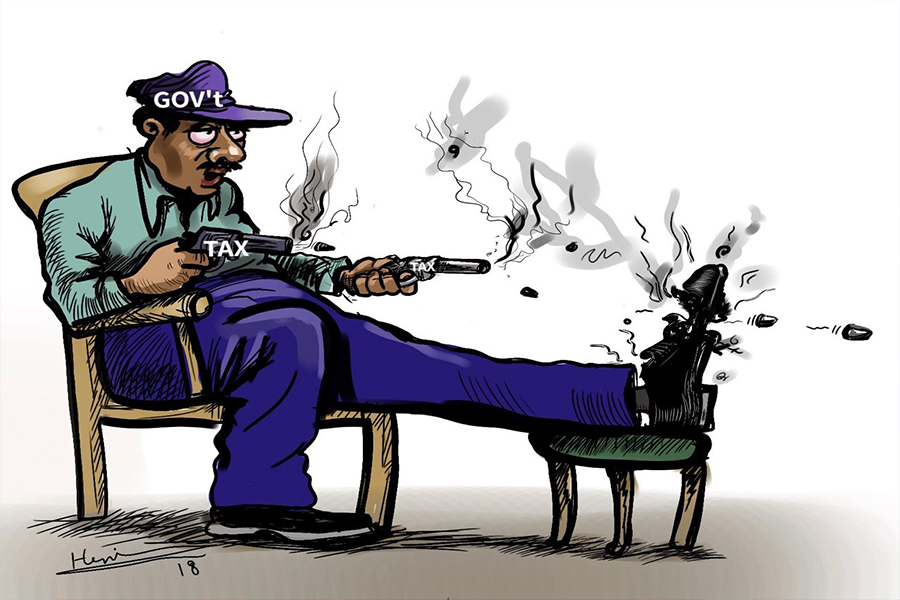
Jul 25 , 2026
Ideally, citizens who have paid income tax all year should not have to reach for thei...
Aug 15 , 2026 . By NAHOM AYELE
Federal prosecutors have charged seven defendants over a set of foreign-trade deals t...
Aug 15 , 2026 . By BEZAWIT HULUAGER
Ethio-post is preparing to turn its thousands of branches into banking agents, allowi...
Kassahun Gofe (PhD), minister of Trade & Regional Integration (MoTRI), is prepari...
Aug 16 , 2026 . By NAHOM AYELE
Justices at the Federal Supreme Court widened the shield they are holding over lawyer...




 Loading your updates...