
Fortune News | Feb 29,2020



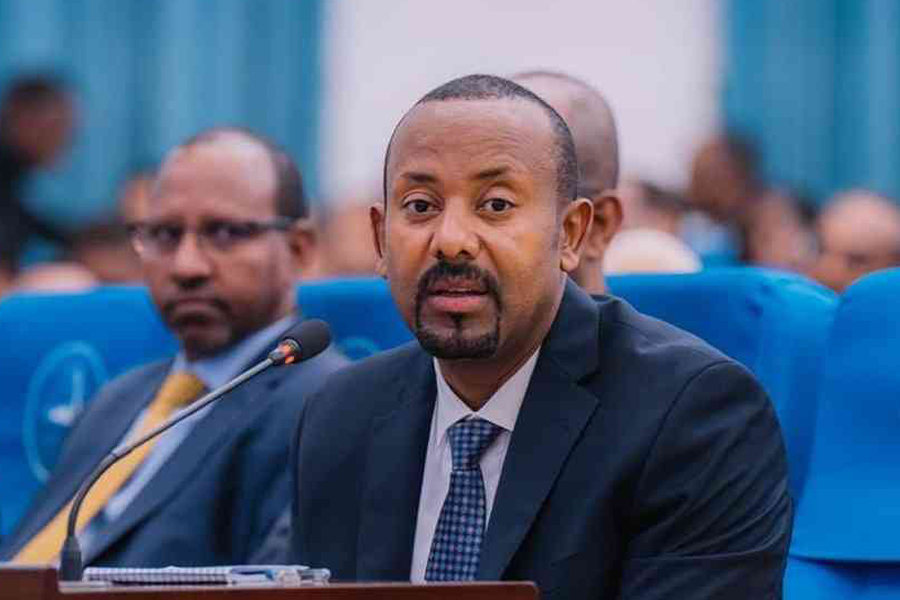
A ruling-party lawmaker, Mohammed Ahmed, called the Chamber to its feet for Prime Minister Abiy Ahmed (PhD). Moments earlier, a sharp opposition voice, Desalegn Chanie (PhD) rose to "testify before history."
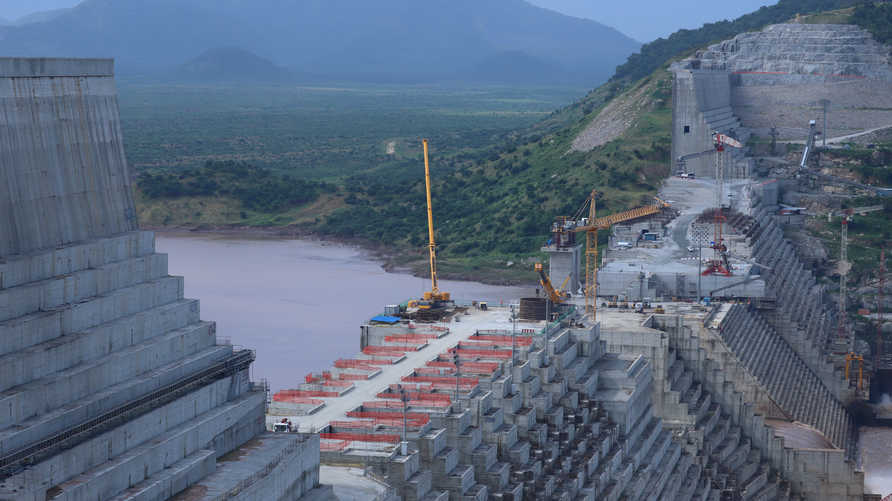
This is two portraits of Ethiopia collided on the floor of Parliament today as federal lawmakers received Prime Minister Abiy Ahmed's (PhD) report on the concluding term of the current house. One MP portraited a country held up across Africa as a model of urban renewal and green ambition, the other of a country at war with itself and buckling under debt.
Mohammed, a legislator from the governing Prosperity Party, who praised the Premier's stewardship and urged his colleagues to rise in a standing ovation. The gesture crowned a run of loyalist tributes through the session, for the Green Legacy tree-planting campaign, a much-imitated urban corridor-development drive, gains in tourism and agriculture, and a surge in foreign direct investment that government allies cast as proof the country had turned a corner.
Desalegn, the vocal opposition lawmaker thanked the Prime Minister, then set about dismantling the report, telling the chamber he intended to "testify before history about the government's weaknesses." He criticised the ruling party for passing laws while silencing the public and extinguishing political alternatives, and recast the past five years as a “chapter of tragedy rather than triumph.”
“Civil war and drone strikes had scarred the Amhara, Oromia, Gambella and Benishangul-Gumuz regions, displacing millions, damaging religious institutions and hardening the country's political fractures,” he said.
He demanded an immediate end to the fighting in Amhara and Oromia regionalstates, and pressed the government on whether a genuine national dialogue, paired with transitional justice, was taking place at all.
His sharpest thrust was aimed at the numbers. The government's report, he charged, rested on “manipulated data”. It claimed 1.5 trillion Br in revenue and 11 billion dollars in exports and remittance.
“Conditions on the ground told another story,” he said.
Desalegn pointed to a 379 billion Br budget deficit, food inflation running at 15pc, a middle class sliding toward poverty, and a budget in which roughly 90pc of spending is consumed by recurrent costs and debt servicing.
“How would the government finance a 1.13 trillion Br budget, and would the macroeconomic overhaul pursued with the IMF and the World Bank deliver real change, or simply tighten the debt trap around the country?” he asked.
Desalegn called the education system a "generational catastrophe." Despite a 26 billion Br allocation, only about 50,000 of some 900,000 candidates passed the Grade 12 examination, a failure rate above 90pc, while seven million children remain out of school entirely. On the humanitarian front, he warned that 27 million citizens now depend on food aid.
The exchange laid bare the reality of Parliament over the past five years where Prosperity Party dominance leaves scant room for dissent and a few opposition figures can enumerate a litany of crises without moving the chamber's applause. Yet the fault lines ran deeper than the government-versus-opposition divide.
Even loyalist members conceded on issues of painful cost of living, corruption and loss of peace, flagging youth unemployment, patchy infrastructure in Benishangul-Gumuz, and an urban housing shortage that high rents have made a chronic burden for low-income families.
For all the standing ovation, it was Desalegn's closing challenge that hung over the session.
PUBLISHED ON
Jul 07,2026 [ VOL
27 , NO
1367]
Fortune News | Feb 29,2020

Fineline | Sep 24,2018

Exclusive Interviews | Apr 10,2026
Covid-19 | Apr 03,2020
Fortune News | Aug 04,2024

Fortune News | Mar 28,2020
Radar | Apr 12,2020
View From Arada | May 04,2019
Fineline | Jan 19,2019
Fineline | Feb 09,2019
Dec 22 , 2024 . By TIZITA SHEWAFERAW
Charged with transforming colossal state-owned enterprises into modern and competitiv...
Aug 18 , 2024 . By AKSAH ITALO
Although predictable Yonas Zerihun's job in the ride-hailing service is not immune to...
Jul 28 , 2024 . By TIZITA SHEWAFERAW
Unhabitual, perhaps too many, Samuel Gebreyohannes, 38, used to occasionally enjoy a couple of beers at breakfast. However, he recently swit...

Jul 13 , 2024 . By AKSAH ITALO
Investors who rely on tractors, trucks, and field vehicles for commuting, transporting commodities, and f...
Jul 4 , 2026
In the goldfields of the Benishangul-Gumuz Regional State, Ethiopia's balance-of-paym...
Jun 27 , 2026
The federal legislative house rushed through one of the country's most contentious ho...
When Parliament takes up the appropriation bill, federal legislators will receive a d...
Jun 13 , 2026
The recent policy decision to fully open freight forwarding to foreign capital may be...










 Loading your updates...