
Commentaries | Sep 06,2020



Mar 9 , 2024
By Madalo Minofu
Climate-related risks present a formidable challenge to Ethiopia's sustainable growth and development. However, the private sector has significant opportunities to build and fund low-carbon and climate-resilient projects.
A recent World Bank Group report finds that climate change could shrink Ethiopia's gross domestic product (GDP) by between one percent and 1.5pc of GDP annually and rise to five percent by the 2040s, potentially pushing millions of Ethiopians into poverty. Millions in the greater Horn of Africa, including Ethiopia, face acute hunger as the region suffers one of the worst droughts in decades. The Ethiopia Country Climate & Development Report (CCDR) outlines how Ethiopia can attract private funds into its green economy to support projects in the agriculture, infrastructure, and water management sectors. These are the sectors with the highest potential to help Ethiopia develop greater climate resilience.
Ethiopia's government recognises climate change's challenges and has an ambitious Climate Resilient Green Economy (CRGE), a strategy designed to support resilient and sustainable growth. The strategy calls for investing in climate-smart agriculture practices to boost production and food security, expanding electricity generation from renewable sources, and modernising transport and industrial activities to be more energy efficient.
The price tag is sizable. The report finds that Ethiopia needs more than 27 billion dollars by 2050 and that the government cannot fund these goals alone. The CCDR offers a blueprint for how the private sector, supported by a robust regulatory framework, can help Ethiopia meet its climate ambitions.
For example, private sector financing could be used to modernise Ethiopia’s infrastructure — including roads and bridges — to better withstand climate shocks.
Potential investors also have opportunities to contribute to the country’s green energy sources. This could mean investing in renewable energy-independent power producers in the agriculture sector to expand access to irrigation and affordable post-harvest storage facilities, to develop climate-resilient livestock and seed, and for targeted insurance products.
The International Finance Corporation (IFC) is already working with partners to strengthen farmer resilience and boost food security. Through its work with Soufflet Malt Ethiopia and Heineken Ethiopia, a local supply chain was established. These companies are now sourcing from more than 70,000 barley farmers, which has helped drive an increase in their production and productivity.
To mobilise this financing, the CCDR recommends that the government leverage public-private partnerships to bring private-sector know-how and investment.
Ramping up green investment in Ethiopia is urgent: the country is particularly vulnerable to climate change, with extreme climate shocks, including drought and floods, adversely impacting agriculture and endangering critical infrastructure in the transport and energy sectors. IFC and the broader World Bank Group are ready to continue supporting Ethiopia in its efforts to attract investment and support its green development.
Ethiopia may not be the only country facing climate change. But given its location and population size, it has the potential to be a regional leader in leveraging creative private-sector engagements for a more sustainable future.
PUBLISHED ON
Mar 09,2024 [ VOL
24 , NO
1245]

Commentaries | Sep 06,2020
View From Arada | Sep 17,2022

Radar | Apr 26,2019
Commentaries | Feb 14,2026
Commentaries | Feb 17,2024
Fortune News | Feb 27,2021
Election 2026 coverage | Apr 16,2026

Editorial | Jun 07,2020
Radar | Oct 14,2023

Commentaries | Feb 08,2020

Photo Gallery | 190614 Views | May 06,2019

Photo Gallery | 180355 Views | Apr 26,2019

Photo Gallery | 177034 Views | Oct 06,2021

My Opinion | 142740 Views | Aug 14,2021



Dec 22 , 2024 . By TIZITA SHEWAFERAW
Charged with transforming colossal state-owned enterprises into modern and competitiv...

Aug 18 , 2024 . By AKSAH ITALO
Although predictable Yonas Zerihun's job in the ride-hailing service is not immune to...

Jul 28 , 2024 . By TIZITA SHEWAFERAW
Unhabitual, perhaps too many, Samuel Gebreyohannes, 38, used to occasionally enjoy a couple of beers at breakfast. However, he recently swit...

Jul 13 , 2024 . By AKSAH ITALO
Investors who rely on tractors, trucks, and field vehicles for commuting, transporting commodities, and f...
Jun 27 , 2026
The federal legislative house rushed through one of the country's most contentious ho...
When Parliament takes up the appropriation bill, federal legislators will receive a d...
Jun 13 , 2026
The recent policy decision to fully open freight forwarding to foreign capital may be...
Jun 6 , 2026
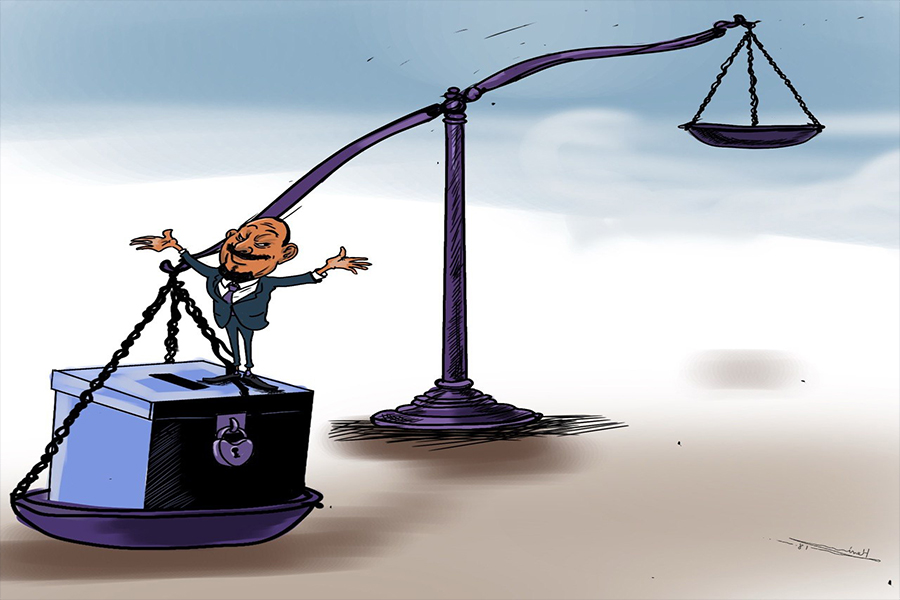
For a political veteran as controversial as Getachew Reda, last week's national elect...
Jun 27 , 2026 . By BEZAWIT HULUAGER
A year after federal transport authorities restricted fossil-fuelled vehicles to clea...
Jun 27 , 2026 . By BEZAWIT HULUAGER
Ethiopia is selling more to the rest of Africa than ever before. The trouble is that...
Jun 27 , 2026 . By NAHOM AYELE
For thousands of Addis Abeba homeowners, a house they paid for years ago may still no...

Jun 27 , 2026 . By NAHOM AYELE
Shareholders and senior managers of Key Housing Finance Solutions Plc are turning on...








 Loading your updates...