




Jan 12 , 2019
By Eden Sahle
Eden Sahle is founder and CEO of Yada Technology Plc. She has studied law and international economic law. She can be reached at edensah2000@gmail.com.
I spent a great deal of time in church when I was a child. Unfortunately, it was an experience that left much to be desired. There was a place where, surprisingly enough, bullying and discrimination was rife and not just by the children.
I know several people who gave up on their faith because of their experiences in religious institutions. Given that religion is held in high regard in Ethiopia, and as a measure of moral and ethical compasses, the shedding of trust of religious institutions in the eyes of the people can have negative social consequences. This is all the more crucial given that alternative secular institutions or organisations are in short supply for citizens to fall back on.
A few months back, I was able to attend a religious organisation which left me discontented. It came off as sexist and insensitive to parts of the public. It was sending the wrong message to the people that were gathered. Taken for granted, such public announcements and teachings can only do more damage than good in people’s social and personal lives.
Religious institutions should be places where people learn life-changing lessons about personal growth and support to one another. It should not be a place where matters of gender, ethnicity and politics are discussed in such a partial and inappropriate language.
Unlike what we see in Ethiopia, the Tanzanian practice is more beneficial to society. I observed a very admirable culture and secular policy where the country facilitates opportunities to create interreligious marriages and collaboration among the different ethnic groups.
When students go to college, they are made to attend a university located far from the place they grew up in to encourage societal cohesion. I was amazed to learn that the country implements the same policy even at correctional centres, keeping convicts with those who came from different parts of Tanzania. And their religious institutions have managed to create respect and collaboration among their different congregations establishing more harmonious communities than it appears to be in Ethiopia.
As can be learned from Tanzania within the social and cultural dimensions, religious institutions can play a great role in creating positive interactions, and connecting communities for a great goal. The process for the adequate fulfilling of moral values – for which many look towards their faiths for inspiration - necessitates the skilful approach of the representative institutional embodiments to realise social harmony.
This serves to develop a set of appropriate social and personal relationships and ties. Where there is a structure of reciprocal dependencies and interactions, it becomes beneficial to create a collaborative and informed society devoted to providing support and mutual respect.
In a country such as Ethiopia, where 98pc of citizens say religion is important to them - one of the highest in the world – according to a Pew Research survey, faith-based institutions should realise their role is more than providing devout teachings but also help build a society that is hospitable, respectful and moral.
They must utilise their influence to inspire the public to act better. They should be sincere, be accountable, and stress the importance of empathy in a nation divided on identity and politics. It will be constructive for everyone if they act with careful considerations regarding not only their own benefits but also the interests of others.
Apart from the inspirational function of religion in the creation of the conceptual foundations of various world-views, the basic ideas, thoughts, values and norms of the analysed dimension of religion have also been seen to imbue citizens with good moral values.
Increased attention should be given to the potential role of shared motivations, common identities and community collaborations to drive socio-economic development. Religion should offer significant protective roles against biases, providing a sense of belonging for citizens.
PUBLISHED ON
Jan 12,2019 [ VOL
19 , NO
976]

View From Arada | Mar 27,2021
Sunday with Eden | Mar 21,2026

Editorial | May 09,2020
Editorial | Jun 14,2025

View From Arada | Mar 09,2019
News Analysis | Mar 21,2026

View From Arada | Jan 11,2020
Sunday with Eden | Sep 06,2025
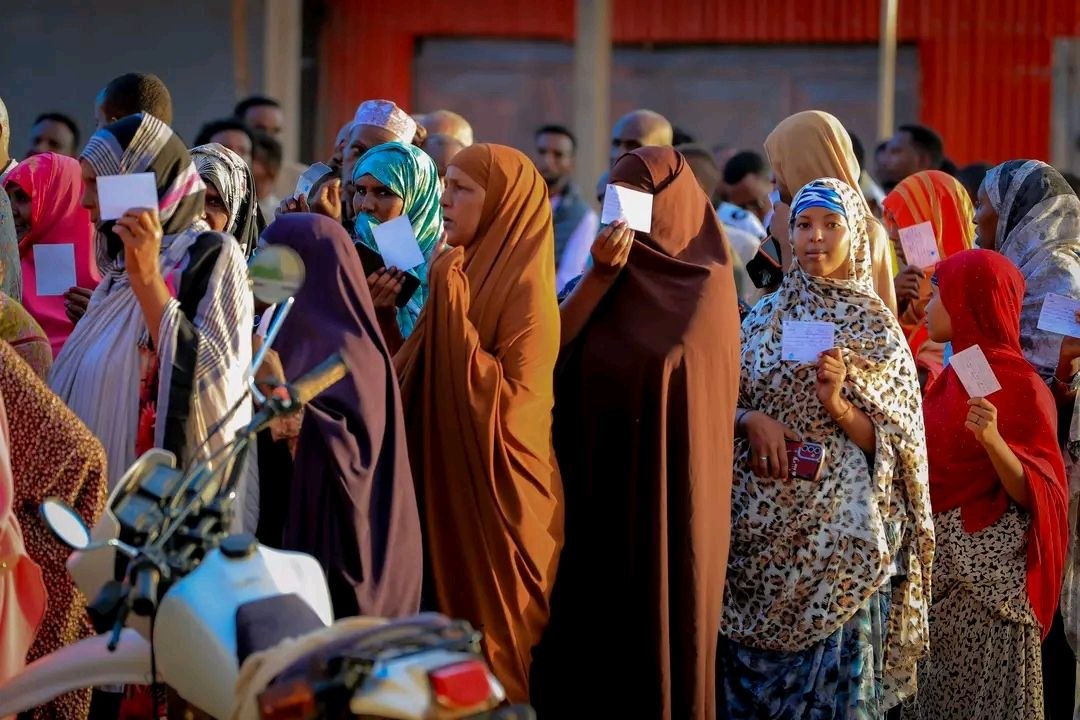
Election 2026 coverage | Jun 01,2026

Photo Gallery | 190998 Views | May 06,2019

Photo Gallery | 180783 Views | Apr 26,2019

Photo Gallery | 177454 Views | Oct 06,2021

My Opinion | 143092 Views | Aug 14,2021







Dec 22 , 2024 . By TIZITA SHEWAFERAW
Charged with transforming colossal state-owned enterprises into modern and competitiv...

Aug 18 , 2024 . By AKSAH ITALO
Although predictable Yonas Zerihun's job in the ride-hailing service is not immune to...

Jul 28 , 2024 . By TIZITA SHEWAFERAW
Unhabitual, perhaps too many, Samuel Gebreyohannes, 38, used to occasionally enjoy a couple of beers at breakfast. However, he recently swit...

Jul 13 , 2024 . By AKSAH ITALO
Investors who rely on tractors, trucks, and field vehicles for commuting, transporting commodities, and f...
Jul 4 , 2026
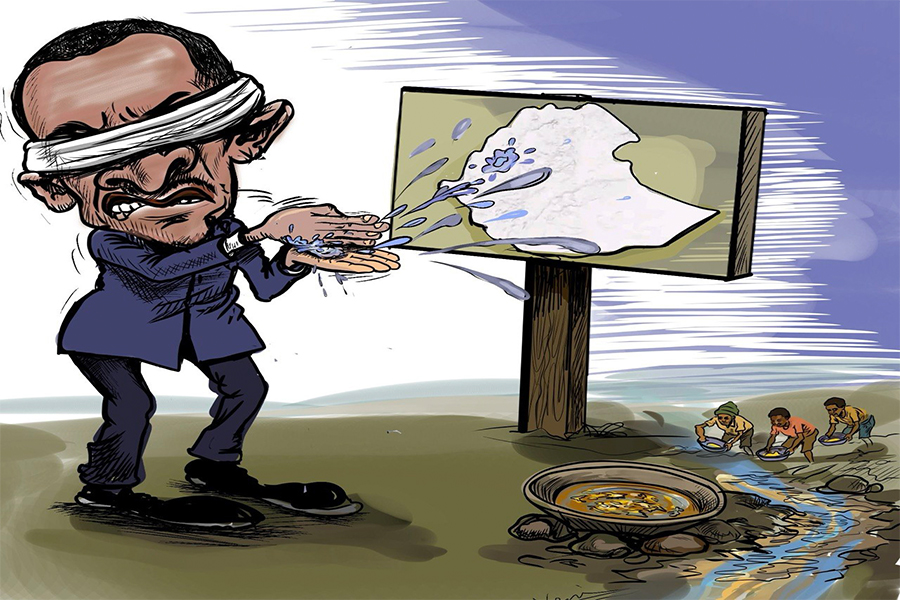
In the goldfields of the Benishangul-Gumuz Regional State, Ethiopia's balance-of-paym...
Jun 27 , 2026
The federal legislative house rushed through one of the country's most contentious ho...
When Parliament takes up the appropriation bill, federal legislators will receive a d...
Jun 13 , 2026
The recent policy decision to fully open freight forwarding to foreign capital may be...
Jul 7 , 2026
The health sector remains underprovided despite rising public spending, Prime Ministe...
Jul 7 , 2026
Prime Minister Abiy Ahmed (PhD) delivered one of his bluntest rebukes yet to the coun...
Jul 7 , 2026
Prime Minister Abiy answered his critics with a mix of gratitude and edge, thanking l...

Jul 7 , 2026
A ruling-party lawmaker, Mohammed Ahmed, called the Chamber to its feet for Prime Min...






 Loading your updates...