
Commentaries | Feb 03,2024



Jan 12 , 2019
By
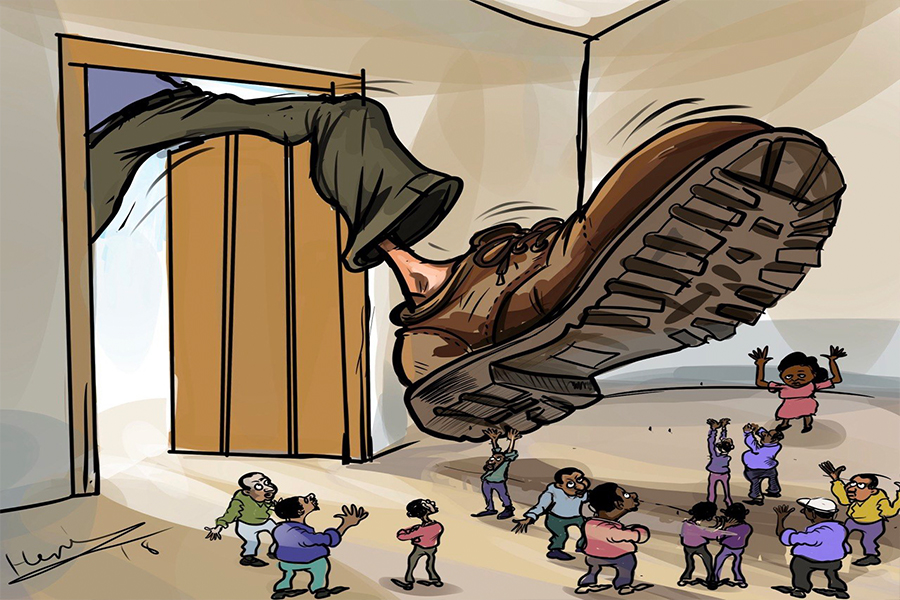
The procedure followed to increase rents for commercial units managed by the Federal Housing Corporation was crude, to say the least. A sudden average increase of 2,090pc on rental fees, however low the original cost, was bound to incur resistance by those directly affected by it.
Businesses are like people. We live within our means or sometimes beyond it. And when incomes fall, it takes time to adjust even where circumstances may have been grossly in our favour.
The same goes for the businesses who found out that their rents would go up in a dramatic fashion with little time to adjust. Fortunately, the Corporation took a cue from the Ethiopian Electric Utility and allowed rental adjustments to take place in gradual increments.
Tenants of commercial units, about 6,128 of them, will pay a third of the total increase during the first year, followed by yearly escalations that reach the final figure within 36 months. The Corporation has also promised to revisit the rental adjustments of some of the tenants.
Despite the initial stumble, it is encouraging to see the Corporation come back from the precipice. For any administration, a dreaded political scenario is to be required to make cutbacks in the face of low revenues, high spending and subsidies. The Corporation, like the utility company, has passed this crucial test - impressive given the complicated political situation the nation is faced with.
These measures should be applied by the government in the gargantuan task of addressing the nation’s macroeconomic predicaments. It should be able to see the big picture and refrain from getting into bed with policies that take stock only of short-term impacts.
Large government spending and subsidies are easy to implement and beneficial to incumbents’ political survival where the alternative can turn out to be very ugly. This was a predicament the French President Emmanuel Macron fell into and had to concede through increases in minimum wages and tax cuts as protests rocked the nation after the price of fuel rose. Matters can get out of hand very easily, grow past the initial points of demand and be sabotaged by political entrepreneurs for their own ends.
It is thus crucial for a government, when circumstances call for austerity, to be able to present alternatives for problems that are bound to be caused by its long-term policies.
Ethiopia is faced with the same problems as the French. There is a government set on cutting expenses and a public worried about the short-to-medium term consequences of the effects of such policies. As far as economics is concerned, there is no panacea to this problem. The suffering during the transition from a government-centric to a private-led economy is unavoidable; if it was, governance and policy-making would be child’s play.
The transition can be cushioned, however. The Corporation’s experience shows that the way new policies are rolled out matter just as much as the policies themselves. There should be transparency, public discussions and processes in place to ensure that transitions and adjustments are as smooth as they possibly can be.
This means focusing on how to make government efficient. If it cannot deliver by growing the economy through spending, then it should be able to facilitate development by regulating better. It is a better bargain because the government is rarely more efficient in providing services and goods than the private sector.
Its efficiency is not merely crucial for dealing with the economy after austerity and the opening up of the economy, but in easing the transition for those that will find making adjustments difficult. It can also make the long-term outlook more promising.
PUBLISHED ON
Jan 12,2019 [ VOL
19 , NO
976]
Commentaries | Feb 03,2024
Editorial | Jun 05,2021

Fortune News | Sep 01,2024

Viewpoints | Oct 18,2025
Commentaries | May 03,2025

My Opinion | Jun 22,2024

Agenda | Jul 21,2024

Sponsored Contents | Mar 28,2022

Exclusive Interviews | Sep 09,2023

Fortune News | Aug 06,2022

Photo Gallery | 191047 Views | May 06,2019

Photo Gallery | 180838 Views | Apr 26,2019

Photo Gallery | 177502 Views | Oct 06,2021

My Opinion | 143137 Views | Aug 14,2021








Dec 22 , 2024 . By TIZITA SHEWAFERAW
Charged with transforming colossal state-owned enterprises into modern and competitiv...

Aug 18 , 2024 . By AKSAH ITALO
Although predictable Yonas Zerihun's job in the ride-hailing service is not immune to...

Jul 28 , 2024 . By TIZITA SHEWAFERAW
Unhabitual, perhaps too many, Samuel Gebreyohannes, 38, used to occasionally enjoy a couple of beers at breakfast. However, he recently swit...

Jul 13 , 2024 . By AKSAH ITALO
Investors who rely on tractors, trucks, and field vehicles for commuting, transporting commodities, and f...
Jul 4 , 2026
In the goldfields of the Benishangul-Gumuz Regional State, Ethiopia's balance-of-paym...
Jun 27 , 2026
The federal legislative house rushed through one of the country's most contentious ho...
When Parliament takes up the appropriation bill, federal legislators will receive a d...
Jun 13 , 2026
The recent policy decision to fully open freight forwarding to foreign capital may be...
Jul 12 , 2026 . By BEZAWIT HULUAGER
When a WhatsApp notice told about 60 households at a gated community on the outskirts...
Jul 12 , 2026 . By BEZAWIT HULUAGER
The Addis Abeba City Administration has begun charging a municipal tax on every hotel...

Jul 12 , 2026 . By BEZAWIT HULUAGER
Bahir Dar International Stadium is nearing completion, and the people building it say...
Jul 12 , 2026 . By BEZAWIT HULUAGER
Federal regulators of the coffee sector are preparing a fund to shield growers and ex...







 Loading your updates...