

Photo Gallery | 192820 Views | May 06,2019



Jul 18 , 2026. By Mekonnen Solomon ( Mekonnen Solomon (ehdaplan@gmail.com) is a horticulture export coordinator and senior staff of the Ministry of Agriculture. )
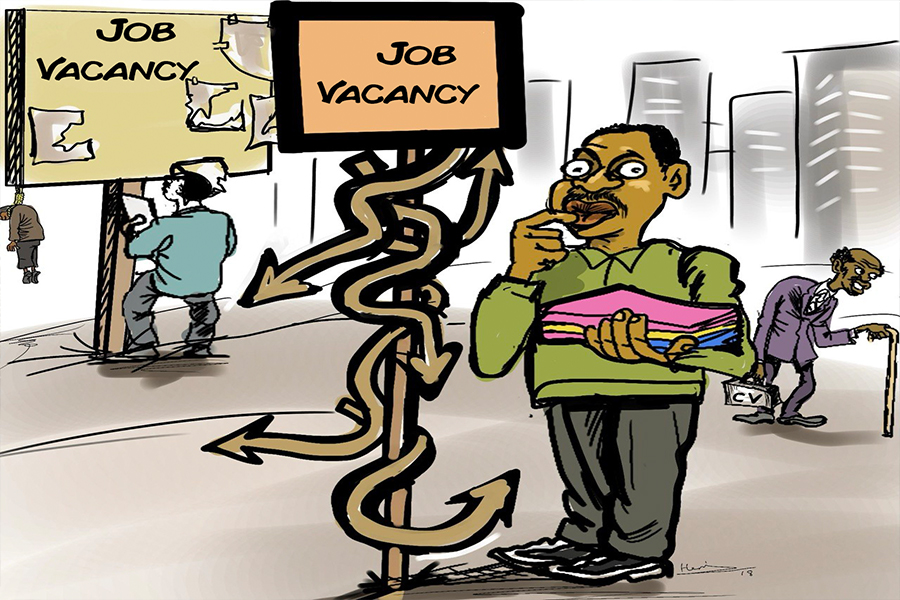
The layoffs facing public service employees treat a structural failure as a headcount problem. The abler course is to move skilled civil servants into private enterprise with land and credit.
In September this year, the federal civil service is believed to have entered a period of deep reform across major economic and social sectors. Policymakers framed it as a vital federal overhaul.
On the ground, the mood has been anxious. With the state being the largest employer, the threat of layoffs has been a source of distress for civil servants and families already living with financial hardship.
More than 2.5 million government employees are staring down that uncertainty, afraid their livelihoods may soon vanish.
As policymakers press ahead with plans for an efficient public sector held to global standards, a wide gap has opened between the promise of progress and the weight felt by those on the front line. They are worried not only about their pay but about a future that feels fragile and beyond their control.
The government has spent too long blaming the employee and too little time fixing the foundation. The honest task is to look past the surface at the structural rigidities and misaligned external pressures that have held back progress. Contrast today's struggle with what happens when civil servants are adequately supported, and a thriving public sector stops looking like a dream and starts looking achievable.
The dominant narrative reduces a complex problem to “overstaffing” and “individual inefficiency.” It is a convenient scapegoat, diverting attention from the deeper faults in our institutions and lending a façade of legitimacy to mass workforce cuts, as though the answer were fewer employees rather than sounder structures.
Isolated cases of low productivity rarely point to individual failure. More often, they are symptoms of a persistent institutional malaise. The skills gap is the direct result of academic curricula that never synchronised theory with the technical demands of modern governance, leaving able professionals ill-equipped.
Any perceived overstaffing is not a failure of the workforce. It is a reflection of the state's inability to build a private sector capable of absorbing that human capital and to create an investment climate favourable to professional youth.
History offers a sharper alternative in the Awash Valley.
Through the 1950s and 1960s, the region's transformation moved in step with the first generation of graduates from Alemaya (now Haramaya) University. These pioneers did not merely fill government posts. As agronomists, farm managers and agricultural economists, they moved straight from the lecture hall into the demanding reality of the Awash Basin, turning scientific methodology into large-scale output and laying the foundations of the national export economy.
When professionals are supported, empowered and aligned with practical needs, they do not just perform. They lead.
Over time, the constraints hardened. The quality of college and university education faded, and schooling increasingly pushed the young towards government jobs as a gateway to stable income, leaving self-employment to feel like a distant dream. Institutions stayed tied to manual operations, rigid procedures, and static management that discourages innovation.
The chronic absence of consistent and field-oriented training has left generations of civil servants without the tools to keep pace with modern practice and technology.
Pay belongs in any honest account. For too long, wages have failed to keep pace with the soaring cost of living.
Only a year ago, the highest gross salary for many civil servants was around 14,000 Br a month, a net of about 9,400 Br, not even 100 dollars. This barely covered food, rent, and school fees, leaving nothing for savings, development, or investment. It runs six to seven times below what the private sector pays for the same role.
Such compensation corrodes motivation and narrows the capacity for creativity, skill and quality work.
A widespread belief now exists among scholars that the push for reform owes less to domestic priority than to pressure from international lenders. Many read the true purpose as a sharp cut in government spending to meet fiscal consolidation targets, through workforce reduction or other austerity measures.
Such a reading breeds tension and erodes trust. Officials insist the initiative is Ethiopia's own, and that the goal is not downsizing but the optimisation of public service through higher standards of efficiency and professional excellence. Still, the scepticism holds, with critics casting the agenda as a veiled mechanism for cutting staff.
The most recent competency examinations, run across four federal institutions, have bred frustration and disillusionment. With pass rates as low as five percent to 10pc, the vast majority failed. Many argue these are not fair measures of competence but instruments engineered to justify a predetermined cut.
As one employee who sat the test put it, when experts “courageously voice these legitimate concerns, they are frequently dismissed by officials and labelled as mere 'resistors to change' or defenders of the status quo.”
Such labelling invalidates their view and widens the divide between leadership and staff. Yet the same history suggests mobility can be a catalyst, moving skilled people beyond bureaucracy into more rewarding paths.
After the Derg fell in the early 1990s, the government adopted structural adjustment programmes (SAPs) to stabilise the macroeconomic imbalances, attract external finance and liberalise industry. Built on currency devaluation, subsidy rationalisation, trade liberalisation, privatisation and fiscal consolidation, they demanded tight control of public wage bills.
These brought workforce cuts and austerity. Yet many of the professionals let go leveraged their expertise into international organisations and private agricultural firms, while others founded consultancies, turning from public service to private leadership.
Many in agriculture today are full of confidence and ambition. Organised well, perhaps as shareholder companies with ready access to land and credit, they believe they could match, even surpass, the Alemaya generation of the 1960s, bringing deep expertise across flowers, field crops, fruit, vegetables, herbs, poultry, fattening, dairy and modern agro-processing.
I recall a moment during the doctoral research of Arkebe Oqubay (PhD), a senior advisor to the former Prime Minister, Hailemariam Desalegn. Leading the National Export Coordination Committee, he asked the staff of the Horticulture Development Agency how best to transform horticultural exports.
Their answer was blunt. They did not want a place on the government payroll. They wanted access to credit and land, the opportunity to move from civil servants into private investors. That remains the way forward.
If current policymakers truly mean to reform the service alongside the World Bank and the IMF, it should ease these skilled people into the private sector, with land and capital to free them to be entrepreneurs.
Civil servants should be considered as far more than cost centres on a balance sheet. They are the foundation of public trust, the implementers of national policy and partners in the search for wealth and stability. Evidence from successful reforms abroad shows that balancing efficiency with equity, investment in people and local adaptation yields better results over time.
Land and bank loans flow to wealthy traders and to an unskilled diaspora, while the country's field-hardened experts, eager to move from payroll to enterprise, are sidelined for reasons that have stayed opaque for decades.
More troubling still should be a fiscal order that reserves foreign currency for importers of liquor, human hair and non-essential cosmetics, while denying committed professionals the capital to import technology and build value-added agribusiness. Reform should shift from administrative contraction to empowering the very people who can build the country’s future?
PUBLISHED ON
Jul 18,2026 [ VOL
27 , NO
1368]
Photo Gallery | 192820 Views | May 06,2019

Photo Gallery | 182723 Views | Apr 26,2019

Photo Gallery | 179483 Views | Oct 06,2021

My Opinion | 144966 Views | Aug 14,2021







Aug 8 , 2026
The World Bank asks readers to picture a mother in rural Ethiopia who has never held...

Jul 31 , 2026
Weldu Yiheysh has not read the Pacific temperature charts. He does not need to. In Shibta District of Enderta Wereda, in...

Jul 25 , 2026
Ideally, citizens who have paid income tax all year should not have to reach for thei...
Jul 18 , 2026
Pressed in Parliament on jobs and household incomes, Prime Minister Abiy Ahmed (PhD)...







 Loading your updates...