
Commentaries | Dec 07,2019
Please complete the security check to continue.



Sep 16 , 2023
By Hintsa Andebrhan
The evolving geopolitics of the Nile River Basin, a region with a rich history steeped in cooperation and contention, mirrors Ethiopia's fluid and dynamic history. A tale that began in the Imperial era and continued during the military-Marxist regime - under the stern rule of Mengistu Haile Mariam (Col.) - witnesses a critical juncture today as the country spearheads the Grand Ethiopian Renaissance Dam (GERD), a colossal hydroelectric project by any measure.
The ember of nationalism heightened during the Derg within the confines of primary schools, encouraging children to harbour dreams for the untapped potential of the Nile. Although marred by endless conflicts, Mengistu's rule displayed an earnest commitment to uplifting the Ethiopian populace, leveraging the resources of the Nile Basin. An ambition, once nurtured in the classrooms of Qeyi'Amba Primary School in Asmara in the mid-1980s is now reverberating on the international stage.
Transitioning into the era of the EPRDF, Ethiopia faced a delicate balance between nurturing multicultural federalism and advancing robust diplomacy for developing the Nile Basin. Despite their divisive domestic approach, the Revolutionary Democrats' pivotal role in launching the Nile Basin Cooperation Initiative cannot be understated. Launched in the late 1990s, this initiative aimed to encourage a harmonious relationship among Nile Basin countries, encouraging equitable resource utilisation, and replacing the outdated agreement signed in 1959, exclusively between Egypt and Sudan.
Yet, a leadership shift and the EPRDF dissolution signalled a turn in Ethiopia's diplomatic trajectory, ushering in the Administration of Prime Minister Abiy Ahmed (PhD). The Administration's critics blame it for diverting from promoting alliances within the Nile Basin Cooperation framework to a strategy perceived as more accommodating to external influences, particularly the United States (US) and the United Arab Emirates (UAE).
The Abiy administration sought mediation from the US and the UAE, respectively. Critics view this as a precarious departure from the solidarity with Nile basin countries, potentially diluting Ethiopia’s bargaining power and inviting undue influence from powers with no stake in the Nile's hydro-politics. Its diplomatic approach seems to teeter on a precarious edge, as experts and diplomats from Ethiopia grapple with mounting pressures.
A recent remark by the Foreign Affairs Spokesperson, Meles Alem, indicates a wider communications gap. He noted, "If justice had been served, Egypt and Sudan should have shared the costs of building the Renaissance Dam." This statement, however, has stirred a storm of speculation and concern within Ethiopia, offering an interpretation that Ethiopia is inviting Egypt and Sudan to acquire stakes in the GERD project.
As the GERD project stands not as a reminder of aid or debt but illustrating Ethiopia's determination, the incumbent Administration's communications strategy demands urgent redress. The necessity here is appointing a communications expert specialising in transboundary river issues to finesse the narrative and fortify Ethiopia's global position.
In this complex geopolitics, Egypt, with the Arab League on its side, appears to be orchestrating a concerted diplomatic campaign, capitalising on perceived fissures within the Ethiopian government's approach. As the UAE assumes a mediating role, there should be caution that this might be an advantageous concession to Cairo, further complicating the intricacies of Nile Basin negotiations. It is incumbent upon the Abiy Administration to realign its diplomatic compass, reinstating Ethiopia's crucial role within the Nile Basin Cooperation Initiative.
The Administration’s foresight and solidarity with the Nile Basin countries could potentially dictate the narrative of regional cooperation or discord.
PUBLISHED ON
Sep 16,2023 [ VOL
24 , NO
1220]

Commentaries | Dec 07,2019
Radar | Aug 05,2023

View From Arada | Feb 22,2020
Radar | Jun 21,2026

Viewpoints | Nov 01,2025
Radar | Nov 11,2023

Exclusive Interviews | May 03,2026
Sponsored Contents | Mar 28,2022
Fortune News | May 11,2019
Radar | Jul 13,2020

Photo Gallery | 193881 Views | May 06,2019

Photo Gallery | 183776 Views | Apr 26,2019

Photo Gallery | 180678 Views | Oct 06,2021

My Opinion | 146022 Views | Aug 14,2021





Dec 22 , 2024 . By TIZITA SHEWAFERAW
Charged with transforming colossal state-owned enterprises into modern and competitiv...
Aug 18 , 2024 . By AKSAH ITALO
Although predictable Yonas Zerihun's job in the ride-hailing service is not immune to...
Jul 28 , 2024 . By TIZITA SHEWAFERAW
Unhabitual, perhaps too many, Samuel Gebreyohannes, 38, used to occasionally enjoy a couple of beers at breakfast. However, he recently swit...
Jul 13 , 2024 . By AKSAH ITALO
Investors who rely on tractors, trucks, and field vehicles for commuting, transporting commodities, and f...

Aug 28 , 2026
Every year, the Ministry of Education (MoE) sets a national examination. Every year,...
Aug 22 , 2026
A record is a strange thing to worry about. Federal trade officials have booked the b...
Aug 14 , 2026
Aschalew Fetene, known as “Ardi” and admired for his poetic depth, has built a ti...

Aug 8 , 2026
The World Bank asks readers to picture a mother in rural Ethiopia who has never held...
Aug 29 , 2026 . By BEZAWIT HULUAGER
The federal government is increasingly relying on Treasury bills (T-bills) to repay T...
Aug 29 , 2026 . By NAHOM AYELE
Judges on a Federal High Court bench have ordered D'Afrique, one of Addis Abeba's old...
Sep 1 , 2026 . By BEZAWIT HULUAGER
The Ministry of Revenues wants to know not just who a taxpayer is but almost everythi...
Aug 29 , 2026 . By BEZAWIT HULUAGER
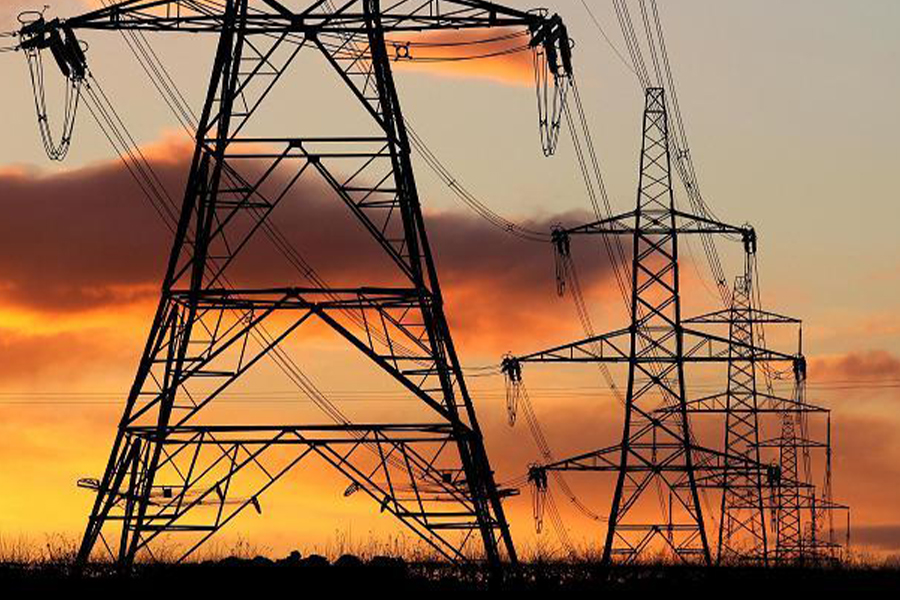
Electricity supplied from Ethiopia has helped halve Djibouti's power production costs...





 Loading your updates...